Get Full Government Meeting Transcripts, Videos, & Alerts Forever!
Get email alerts on the Housing Policy topic
No spam. Unsubscribe anytime.
Public raises transparency concerns as commission discusses housing-production subcommittee
Summary
Public commenters accused commissioners of perceived bias toward developers and urged more transparency in a housing-production subcommittee; commissioners defended the subcommittee process and said they will publish more documentation and include a draft report in the next packet.
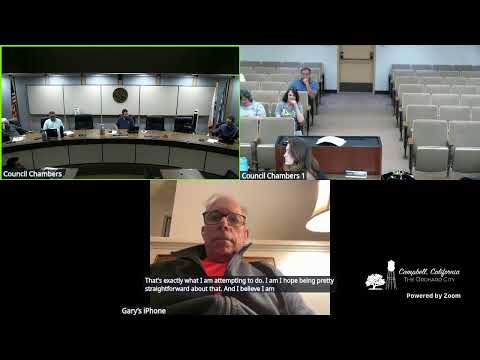
Public concern over transparency and perceived commissioner bias surfaced repeatedly at the May 12 Campbell Planning Commission meeting as commissioners reviewed reports from a housing-production subcommittee and discussed outreach plans.
Susan Landry, a frequent public commenter, challenged the commission’s minutes and objected to language she said misquoted her on the owner-occupancy issue. "I said I strongly object to getting rid of the owner occupancy requirement because I'm concerned they will become short term rentals," she told the commission, asking that the minutes be corrected.
Later during discussion of the subcommittee, public commenters again expressed worry that commissioners and developers were "in cahoots," a perception they said dated back to 2016. Commissioners and subcommittee members defended the work. One subcommittee member said the group has interviewed developers and a county affordable-housing representative and is exploring regional approaches and potential joint sessions with the city council to increase housing production.
Commissioner (speaker 10), who chairs the subcommittee on housing production, said the group is compiling findings and intends to include a draft report in the next meeting packet. He said the subcommittee’s purpose is "improving housing production in Campbell," adding that the group has met with an affordable-housing developer and plans to meet further with staff and other stakeholders.
Commissioners noted procedural limits under the Brown Act on contacts and emphasized that subcommittees were formed with department approval; they also urged members of the public with specific accusations or evidence to submit written comments and participate in meetings. Several commissioners reiterated that Form 700 disclosures and public processes govern their conduct.
The commission agreed to include more documentation of subcommittee contacts and to provide a more stable draft of the report in the next packet so the public can review and comment. No formal action was taken on policy changes; the conversation was informational and will be revisited in future meetings.