Get Full Government Meeting Transcripts, Videos, & Alerts Forever!
Get email alerts on the Property Tax topic
No spam. Unsubscribe anytime.
Cochise County staff to build FY2027 on a 'flat levy' assumption to avoid Truth in Taxation hearing
Summary
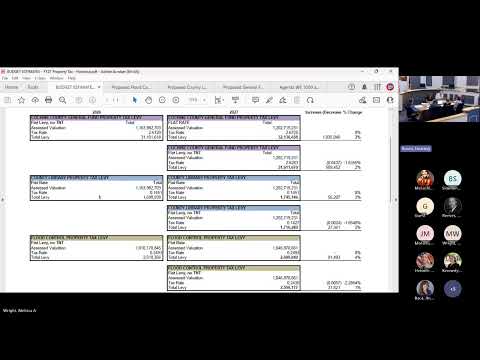
County budget staff told supervisors on May 14 the FY2027 proposal remains unbalanced and recommended building the tentative budget assuming a flat levy (lowering the rate to offset assessed-value growth) to avoid a Truth in Taxation hearing; staff warned that doing so would cut property-tax revenue by roughly $525,000 in the general fund.
The Cochise County Board of Supervisors discussed whether to hold a Truth in Taxation (TNT) hearing or adopt a flat levy on May 14 as staff continued work to balance the FY2027 budget.
Sharon, the county budget director, told the board the budget is not balanced and that staff are still waiting on the state legislature for key decisions, including whether the state will continue reimbursing counties for the state's portion of probation officers. "We have not balanced the budget yet," Sharon said, warning the board that legislative changes could force difficult local choices.
A central choice facing supervisors is whether to keep the property‑tax rate the same as this year (a "flat rate") or adopt a flat levy that lowers the rate to offset increases in assessed value so the county can avoid a TNT hearing. Sharon explained that a flat levy would reduce general‑fund property‑tax revenue by about $525,000 and reduce the library and flood-control district levies by smaller amounts.
Several supervisors said they prefer to avoid a TNT hearing and present to residents that the county is not raising rates. One supervisor argued that assessed‑value growth this year largely reflects new construction and large land purchases by out‑of‑county buyers and that keeping the rate flat would, in effect, mean residents pay more: "If we just keep the rate where it's at now, they're gonna pay more taxes," the supervisor said. Staff noted that new commercial or industrial valuation is assessed at a higher ratio (15%) than residential (10%), which can shift the tax burden and allow the board to lower rates while broadening the tax base.
Sharon and other staff said the FY2027 revenue picture also includes roughly $509,000 attributable to new construction (if a TNT hearing is not required) and a projected increase of about $1.5 million in state‑shared transaction privilege (sales) tax receipts. At the same time, department‑collected fees are expected to decline roughly 3%, largely from fewer building and solar permits and potential state changes to septic permitting fees.
The board gave staff direction to continue building the tentative budget with the no‑TNT (flat levy) scenario as the working assumption; any formal decision on the levy or TNT hearing will come later when the board approves tentative figures. Staff said tentative adoption will include some contingency to allow for possible legislative changes between now and the tentative deadline.
The supervisors did not take a formal vote on the levy at the meeting. The board's next step will be a continued budget analysis ahead of tentative adoption, and staff said they will return with more detailed reconciliations and a recommendation for formal action.