Get Full Government Meeting Transcripts, Videos, & Alerts Forever!
Get email alerts on the Public Safety Wildlife topic
No spam. Unsubscribe anytime.
Cache County enacts ordinance banning intentional feeding of wild animals in unincorporated areas
Summary
The council unanimously passed ordinance 20-26-26, prohibiting intentional feeding of wild animals in unincorporated Cache County (with specific exceptions). The county attorney recommended removing a presumption-of-intent clause; the council adopted the ordinance as amended.
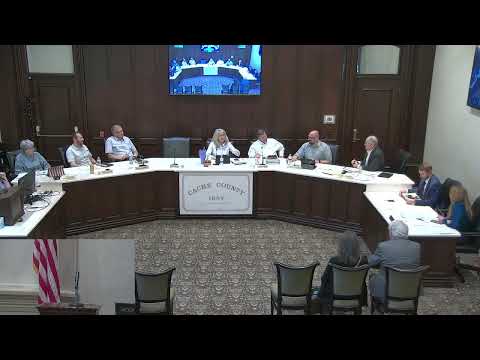
The Cache County Council approved ordinance 20-26-26 to prohibit the intentional feeding of wild animals in unincorporated areas, a measure the sheriff requested after repeated problems with wildlife habituation (notably wild turkeys in Mendon) and related property damage and vehicle collisions.
Staff described the ordinance’s goals: reduce vehicle collisions, mitigate property damage, prevent wildlife habituation, and limit attraction of predators to neighborhoods. The draft defined ‘‘feeding’’ and ‘‘wild animal’’ and listed exceptions for normal agricultural practices, authorized feeding programs, songbirds and hummingbirds, naturally growing plants and state or local officials acting in an official capacity.
County legal counsel (referred to in the meeting as Murray) raised concerns about a presumption-of-intent clause in the initial draft, arguing that shifting the burden onto defendants for a criminal enhancement (a class B misdemeanor for repeated violations) would be problematic. Staff accepted the attorney’s recommendation to strike the presumption and instead require proof that the act was knowing or intentional.
Council members also discussed practical concerns raised by farmers who rely on stacking hay for livestock and the potential for accidental impacts as well as the role of state wildlife officials. The ordinance includes a warning for first offenses and escalating fines for repeat infractions; persistent violations (three citations in 12 months) could elevate enforcement to a criminal level, though the county attorney emphasized caution about criminalizing innocent conduct.
After adding technical amendments recommended by the county attorney, the council voted unanimously to suspend the rules and adopt ordinance 20-26-26 as amended. The county said first responses would focus on warnings and remediation opportunities to avoid criminal charges where possible.