Get Full Government Meeting Transcripts, Videos, & Alerts Forever!
Get email alerts on the Downtown Specific Plan topic
No spam. Unsubscribe anytime.
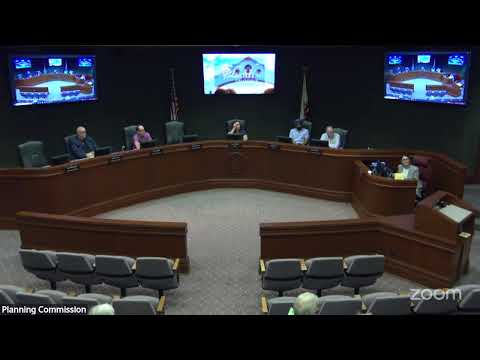
Lodi Planning Commission recommends city adopt Downtown Specific Plan after public support, funds and rail questions remain
Summary
The commission voted 5-0 to recommend that the City Council adopt a Downtown Specific Plan that emphasizes housing, historic preservation, multimodal access and place-making; commissioners and the public pressed staff on funding, Union Pacific coordination and implementation steps.
The Lodi Planning Commission on May 13 voted 5-0 to recommend the City Council adopt a Downtown Specific Plan that outlines a 20-year vision for Main Street and adjacent blocks, including new design standards, pedestrian and bicycle improvements, place-making features and potential redevelopment along parcels adjacent to the Union Pacific rail line. A public hearing, consultant presentation and extensive public comment preceded the vote.
Cynthia Marsh, interim community development director, opened the hearing and introduced Jamie Williams of RRM Design Group, the lead consultant. "A specific plan is almost like a mini zoning code and master plan for a specific area," Williams said, describing the plan area roughly bounded by Lockford, the South Pole complex, Lodi Avenue, Pleasant Avenue and Washington. The document is divided into 10 chapters covering land use, infrastructure, mobility and implementation, she said.
Why it matters: The plan is intended to guide downtown redevelopment and position the city to pursue layered funding — state, federal and local grants as well as SJCOG and Measure K sources — to implement sidewalks, streetscape improvements, plaza and alleyway enhancements and other public-realm work. Staff and the consultant emphasized the plan also creates eligibility for grants targeted to state-designated disadvantaged communities in areas east of the railroad.
Public and commissioner concerns: Commissioners pressed staff on connectivity beyond the core quarter-mile study area and on negotiations with Union Pacific over rail-adjacent parcels. Marsh said the plan focuses on the downtown mixed-use zone but includes connections beyond the mapped area and noted staff is performing title reports and surveys to clarify ownership and acquisition options for the rail parcels. "We are in discussions with them," Marsh said, adding that title research and funding work is underway.
Several members of the public supported adoption but urged concrete next steps. David Claxton, president of the Downtown Business Alliance and a steering committee member, told the commission the document "lays out a pretty clear vision" and recommended establishing a steering or ad hoc committee to keep the plan from "sitting on a shelf." Michael Collins, a downtown businessman, said he strongly supports a railroad quiet zone but warned of high costs and suggested examining traffic changes (such as stopping Locust and Elm as through streets) to reduce expense. "I think that would be a fantastic plan," Collins said, urging action on Sacramento Street to attract developers.
Skepticism about follow-through surfaced repeatedly. Commenter Mike Karuba said past plans have not always translated into completed projects and cautioned against relying on aspirational imagery without a funding strategy. In response, staff and steering-committee members said the implementation plan and future grant work will determine sequencing and that some elements could be completed through grant-funded CIP projects managed by public works.
Formal action: After public comment the commission voted to adopt a resolution recommending the City Council adopt the Downtown Specific Plan, finding it consistent with the General Plan and that environmental review requirements had been met. The commission recorded the motion and a second and the measure passed 5-0; two commissioners were absent.
Next steps: Staff said the recommendation will be forwarded to the City Council and that the city manager plans a council study session on growth and annexations in the coming weeks. Staff and several steering-committee members also discussed holding regular post-adoption meetings (quarterly or semiannually) to track implementation and grant applications. The plan itself is structured to support grant competitiveness and to guide design standards, but specific project funding and the timing of major rail-related redevelopment are unresolved.
Implementation details and open items: The plan recommends objective design standards to regulate future multifamily development, explores a potential quiet zone that requires coordination with Union Pacific and safety upgrades, and lists potential funding sources (Transformative Climate Communities grants, ATP, federal and state programs, SJCOG and Measure K). Staff said locations for public restrooms and other detailed implementation measures will be determined during the CIP and grant phase; those locations are not specified in the plan.
The commission adjourned after briefly discussing upcoming agenda items, including a subdivision/parcel split and planned amendments to the city's food truck/mobile vendor ordinance.