Get Full Government Meeting Transcripts, Videos, & Alerts Forever!
Get email alerts on the Encampments topic
No spam. Unsubscribe anytime.
Providers warn of growing riverfront encampments and urge rapid sanitation, outreach and rehousing steps
Summary
COC and city staff reported roughly 80 people at the Free Bridge encampment, urged immediate porta‑potties, trash and sharps containers, and discussed a $1.775 million estimate to rehouse 50 people under a direct‑to‑housing program; fire risk and propane tanks made the situation urgent.
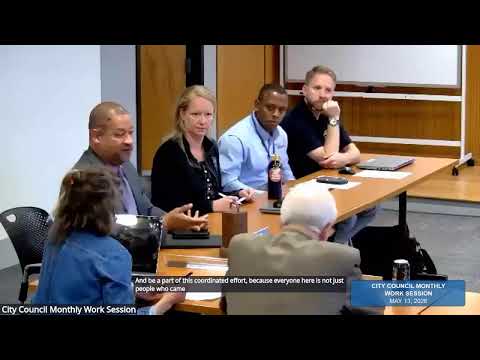
At the May 13 Charlottesville council work session, providers and city staff described worsening conditions at riverfront encampments and pressed for immediate sanitation, increased outreach capacity and a coordinated rehousing effort.
A COC representative said recent counts showed about 80 people living at the Free Bridge site and cited serious risks from flooding and fires. The COC relayed a Clutch Consulting estimate that a 1½‑year direct‑to‑housing effort to rehouse 50 people would cost $1,775,000 and said rehousing the full encampments would require roughly twice that amount.
Providers identified immediate, low‑cost interventions: more porta‑potties, additional trash pickup and more sharps containers. A partner representing local river businesses said access and logistics at Free Bridge make some interventions difficult, but urged that porta‑johns were an urgent public‑health priority.
Public‑safety concerns were front and center after a weekend fire. A city responder who joined the session described gaining access and extinguishing a recent tent fire in roughly eight minutes but warned crews would struggle if fires began in harder‑to‑reach spots. Participants also flagged the presence of propane tanks in camps as an ongoing hazard.
Providers said outreach and case‑management capacity are at or near maximum and asked council to fund at least one full‑time project manager to coordinate short‑term site work, alternative campsite preparation (COC proposed Holiday Drive as one option), and rehousing RFPs; the COC estimated a fully burdened project‑manager position at roughly $80,000 a year.
Councilors and staff discussed phasing options — mobile clinics, trailers or hotels as interim sites — and the risks of displacing people without an available alternative. No enforcement action was announced at the meeting; participants asked for rapid coordination so that sanitation measures and safer site alternatives could be in place quickly.
The meeting ended with staff committing to more frequent updates to council and to continued work with BRAC and provider partners to produce concrete operational and funding plans.