Get Full Government Meeting Transcripts, Videos, & Alerts Forever!
Get email alerts on the Education Assessment topic
No spam. Unsubscribe anytime.
Santa Maria‑Bonita releases 2025 CASP and ELPAC results; district leaders outline literacy, math and special‑education steps
Summary
District leaders presented 2025 CASP and ELPAC results showing 24.78% of students meeting ELA standards and 17.66% meeting math standards, described teacher training in the science of reading, curriculum alignment work and special‑education supports intended to close persistent gaps.
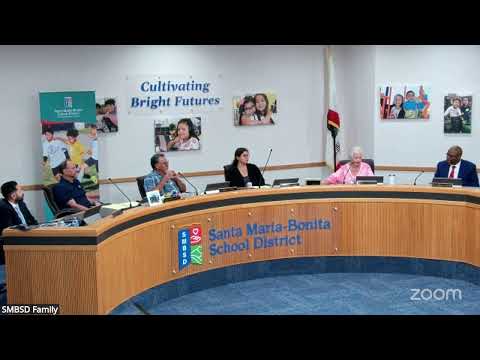
The Santa Maria‑Bonita School District on Tuesday presented newly released 2025 CASP and ELPAC results and described a package of training, curriculum and support strategies aimed at improving student outcomes.
At a board meeting where Mrs. Grock introduced the data, the district reported that 24.78% of students met or exceeded standards in English language arts and 17.66% met or exceeded standards in math. "Assessment results help us understand growth challenges and alignment with our mission," Mrs. Grock said, adding that scores are used by the state for accountability and by colleges for course placement.
The district emphasized a multi‑pronged response. Dr. Salceto, director of teaching and learning, said the district has invested in science‑of‑reading professional development and professional learning communities (PLCs). "When teachers are trained in these evidence‑based practices, they're better able to identify areas of struggle for students, provide targeted supports and prevent reading difficulties before they widen," Dr. Salceto said. The transcript records that 272 teachers had completed their second year of that training and 180 were working to complete it.
Officials also described math work tied to new, state‑aligned curriculum editions. The district has adopted I‑Ready and mid‑school math and is transitioning to the California editions required by the new state math framework. Dr. Salceto said the district tracks both "annual typical growth" and personalized "stretch goals" so students and classrooms can monitor and celebrate progress.
The board heard that progress has been uneven across student groups. Mrs. Grock said dual‑immersion students significantly outperformed district averages, while students with disabilities were the lowest performing group. Staff underscored that some literacy and WestEd‑partner sites began farther from standard and therefore require multi‑year comparison to judge progress: district materials provided to the board disaggregate those site results, the presenters said.
Multilingual services are new and expanding, according to Dr. Castillo Schiffer, director of multilingual services. She described updated K–5 designated ELD pacing guides focused on language production, completed ELPAC scope‑and‑sequence guides, targeted professional development (including Saturday sessions) and parent‑facing resources such as ELPAC explainer videos and a radio program. "When our parents encourage their children, of course they do better," she said.
The district's special‑education director, Armando Aribe, outlined staffing and assistive‑technology steps intended to reduce gaps. Aribe said the district added four district support staff, two board‑certified behavior analysts and 12 additional education specialists to lower caseloads; an AAC (augmentative and alternative communication) framework has put communication devices in students' hands, with 95 devices already provided and additional deployment planned.
Board members pressed for detail about implementation and urged more experiential learning and VAPA (visual and performing arts) opportunities to support language acquisition and engagement. Presenters said experiential learning is emphasized in expanded‑learning, after‑school and summer programs and that the Bright Futures initiative will knit the work together.
Staff also cautioned that county and state comparison data remain embargoed pending state verification. They said they will return with regional comparisons and updates once that review is complete.
The board was presented three key takeaways: growth is occurring but modest; gaps remain and will be a focus; and strategic actions are underway to address inequities. The district said it will continue to report updates to the board and share disaggregated data in packet materials.