Get Full Government Meeting Transcripts, Videos, & Alerts Forever!
Get email alerts on the District Budget topic
No spam. Unsubscribe anytime.
Poway Unified projects $13 million shortfall over three years; board approves layoff resolution
Summary
Trustees heard a May budget update showing lower state COLA and declining enrollment that together reduce LCFF revenue, producing an estimated $13 million shortfall across three years; the board approved Resolution 74-2025 to give layoff notices to affected classified employees.
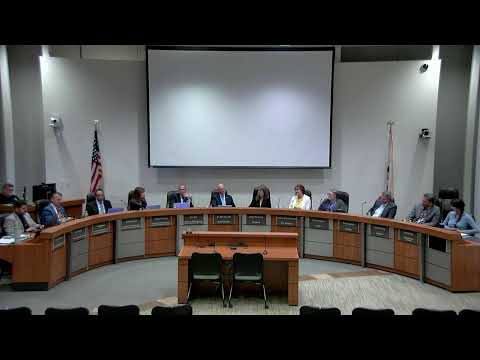
Poway Unified School District trustees were told at a board meeting that changes in the state budget and continued enrollment declines have worsened the district’s revenue outlook, producing a projected $13 million shortfall over the next three years.
Chief business staff presenting the May revision said the statutory cost-of-living adjustment (COLA) used in the governor’s May proposal is 2.3 percent — lower than earlier estimates — and that the district’s declining average daily attendance cuts into the LCFF entitlement, muting the COLA’s benefit. The presenter summarized the practical effect as “the budget is a plan and it’s built off of the information that we know at the time,” and warned that later adjustments may require a 45‑day revision after the governor signs the budget.
Trustees were reminded that the board previously adopted targets to reduce expenditures by $10 million in 2025–26 and an additional $3 million in 2026–27; staff said personnel actions account for about 75 percent of the savings already identified. Using current projections for COLA and enrollment, staff estimated the district is roughly $1.8 million below December revenue projections for the coming year, about $5.8 million lower for 2026–27, and about $13 million cumulatively over three years.
As part of the meeting’s consent and action calendar, legal counsel presented Resolution 74‑2025, which gives notice to classified employees identified after administrative hearings and follows the statutory layoff process. Counsel cited Education Code 45117 and described the process: notices were issued, 26 employees requested hearings, hearings were held before an administrative law judge, and the judge issued a proposed decision identifying remaining respondents. “The board is asked to consider and approve the attached resolution,” counsel said.
A trustee moved the resolution; the motion was seconded by Mr. Dockery. The motion carried and the board approved the resolution (motion recorded as carried with six votes in favor). The board did not read individual roll-call votes aloud in the transcript.
Board members pressed staff on next steps and on whether one‑time revenue that may later be certified under Proposition 98 would materially alter the outlook; staff said such funds typically arrive as one-time money in a later year and would not eliminate the need to address ongoing expenditure-revenue imbalance. Staff also confirmed that, should the final state action differ materially, the district would return with a 45‑day revision to amend the adopted plan.
The board scheduled public hearing and first reading of the proposed budget at its June 5 meeting with adoption targeted for June 17, and said it would monitor any trailer bills or revisions through August that could prompt a 45‑day revision.