Get Full Government Meeting Transcripts, Videos, & Alerts Forever!
Get email alerts on the General Plan topic
No spam. Unsubscribe anytime.
San Carlos commission backs certification recommendation for 2045 general plan EIR despite unavoidable air, GHG, transportation and wildfire impacts
Summary
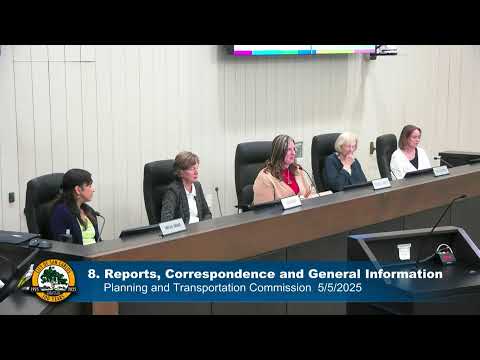
The Planning & Transportation Commission voted unanimously May 5 to recommend the City Council certify the final EIR and adopt proposed amendments for the City of San Carlos 2045 general plan reset. Staff and consultants said the programmatic EIR finds most impacts are less than significant but identified unavoidable, program‑level impacts for air quality, greenhouse gases, transportation and wildfire; the recommendation includes a draft statement of overriding considerations and directs project‑level mitigation going forward.
The San Carlos Planning & Transportation Commission on May 5 voted unanimously to recommend that the City Council certify the final environmental impact report for the city’s proposed 2045 general plan reset and adopt related general plan amendments.
Staff and consultants presented the 2045 plan as a programmatic update to reset the city’s development capacity through 2045, noting it does not change existing zoning, heights or land‑use designations but does adjust development projections used in the EIR. Akani Sha Chopra, senior management analyst for the Community Development Department, said the project “will reset the capacity of the general plan to accommodate development interest for the next 20 years until 2045.”
Why it matters: the final EIR analyzed a high‑end buildout scenario and found most environmental topic areas would be less than significant, but—because this is a programmatic document that evaluates maximum potential growth—consultants said some impacts are significant and unavoidable at the program level. “Significant and unavoidable impacts were found in the topics of air quality, greenhouse gas emissions, transportation, and wildfire,” consultant Steve Noak told the commission, noting those findings stem from the programmatic scope rather than a project‑level analysis.
What the commission heard and decided: the staff presentation reported projected net changes to 2045 that were used in the EIR (staff cited a net increase of roughly 8,000 housing units and a population increase on the order of 15,000 residents under the analyzed scenario). Commissioners pressed staff on several topics during the Q&A, including the Sequoia School District’s letter asking the city to consider secondary impacts around schools; staff responded that the EIR addresses air, noise and transportation in separate chapters and that specific mitigation and consultation will be refined at the project level.
On process and next steps: consultants reviewed comment letters incorporated into the final EIR (including biological resources, geology/soils, liquefaction, hydrology/water quality, Senate Bill 272, and regional shoreline adaptation issues) and explained that adoption requires a ‘statement of overriding considerations’ describing how the project’s social, economic or other public benefits outweigh the unavoidable impacts. The commission moved, seconded and recorded a unanimous roll‑call vote recommending certification of the EIR and recommending that the City Council adopt the proposed general plan amendments. The items will now go to City Council for hearings and action.
Key quote: “This is a disclosure document so that people know what the potential impacts are before making a decision on a project,” consultant Steve Noak said, summarizing CEQA’s role.
What’s next: the commission’s votes send the EIR and the proposed plan amendments to the City Council, which staff said will consider the materials at upcoming hearings. Staff emphasized that subsequent development proposals will undergo project‑level environmental review and mitigation, where feasible, to address site‑specific impacts.
Votes: the commission recorded unanimous approval on both motions (all five commissioners — Anund, Bundy, Castanada, Garvey and Clemens — voted yes).