Get Full Government Meeting Transcripts, Videos, & Alerts Forever!
Get email alerts on the Charter Compensation topic
No spam. Unsubscribe anytime.
Eureka council signals support to raise council and mayor pay, directs staff to prepare ballot measure
Summary
At a special April 7 study session the Eureka City Council directed staff to draft charter amendment language to raise council and mayor monthly pay (current: $500 council, $625 mayor), tentatively favoring doubling salaries as a baseline and allowing annual increases up to 5%; staff will return with ordinance language and public-hearing dates ahead of the Nov. 3, 2026 ballot.
At a special study session on April 7, the Eureka City Council discussed amending the city charter to increase monthly pay for council members and the mayor and directed staff to return with ordinance language and a public-hearing schedule ahead of the Nov. 3, 2026, election.
City Attorney Black told the council the charter’s compensation provisions are 38 years old and “the current city council monthly salary of $500 is truly out of date,” and presented two main drafting options: import the state general-law compensation scheme (which would start a council baseline at $950 but would require equal pay for mayor and council under general law), or draft charter-specific language that could set a different baseline and allow a higher mayor salary and an annual adjustment provision for up to 5% per year.
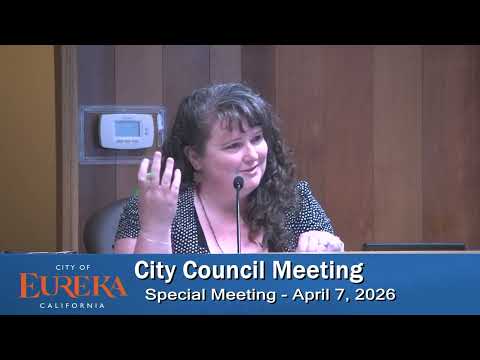
Councilmembers debated concrete numbers and mechanisms. Several members said raising pay is an equity issue that would broaden the pool of people able to serve. Councilmember Molton said she holds multiple jobs and described the time and economic strain of serving, arguing the stipend should not restrict service to those who can afford it. “I do have currently three jobs,” Molton said, explaining that higher pay would make it more feasible for working families to seek office.
Options discussed included adopting the state baseline of $950, doubling the current pay (example figures discussed: $1,000 for council members and $1,250 for the mayor), or targeting an inflation-adjusted figure (members referenced roughly $1,400). The council coalesced around direction to staff to treat doubling as a starting baseline, set a maximum annual adjustment of 5%, and use the finance advisory committee or another citizen advisory body to recommend the percentage in future years; any annual increase would still require a council ordinance to take effect.
City staff clarified procedural steps and deadlines for placing an amendment on the ballot: the council must hold two public hearings at least 30 days apart (staff proposed a first hearing April 21 and a second after May 21) and file the resolution and election materials in time for the clerk’s June 16 deadline to appear on the Nov. 3, 2026 ballot. Staff also noted costs for printing and candidate statements vary by county and by how many jurisdictions share an election; exact election cost estimates were not specified.
No members of the public spoke during the item’s public-comment period. The council gave staff direction and asked the city attorney and assistant city manager to return with draft ordinance language and the public-hearing schedule; staff said the ordinance and ballot question could still be adjusted before the council’s second public hearing.
The meeting adjourned after the direction was given.