Get Full Government Meeting Transcripts, Videos, & Alerts Forever!
Get email alerts on the Public Transit topic
No spam. Unsubscribe anytime.
Springfield City Commission hears update on Field Trips microtransit; presenters cite ridership gains and safety technology
Summary
City staff and vendor Via told the Springfield City Commission that the Field Trips microtransit service has provided more coverage than the previous fixed-route system, delivered about 70,000 rides since launch, averages roughly 10,000 trips per month and uses in-vehicle safety tech and driver vetting while exploring countywide expansion.
The Springfield City Commission heard a work-session briefing on Field Trips, the city’s microtransit service, where city staff and vendor representatives described ridership gains, operational metrics and next steps for potential countywide expansion.
City Manager Brian (as identified in the transcript) introduced the item and turned the presentation over to staff and vendor teams. Isaiah Torres, Springfield local field manager for Field Trips, and Florian, the service’s general manager from the vendor (Via Transportation), described the shift from a traditional fixed-route system to an on-demand microtransit model designed to increase coverage and flexibility.
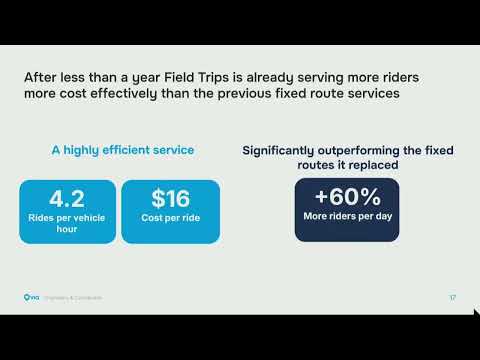
Why it matters: presenters said the service is intended to better match how residents travel, expand coverage and reduce per-ride subsidy compared with the prior fixed-route system. They reported more than 70,000 rides since the service launched in July and said unique riders have grown from roughly 300–400 to about 1,500. Staff said the system averages about 10,000 trips per month over the seven-month rollout period.
Safety and operations: presenters described a multi-step driver vetting and training program (background checks, drug and alcohol screening and onboarding) and said vehicles are equipped with AI-enabled cameras and a vendor safety portal that assigns multi-factor safety scores to driver partners. Florian said the safety portal is used to identify and reward safer drivers and to remove or reassign drivers who do not meet standards.
Service metrics: presenters said coverage has increased by about 60% versus the old fixed-route network. They reported an average of 4.2 riders per vehicle hour (up from mid-twos under the former Springfield City Area Transit system), a flat fare of $2 (reduced to $1 for riders with disabilities and people 65 and older), roughly 40% of vehicles available with wheelchair access, average pickup times of about 16.5 minutes and onboard travel times of about 13–14 minutes.
User experience and data: presenters said app adoption has risen to about 88% of ride requests, ride completion rates exceed 90% and customer satisfaction scores run in the low 90s—above typical industry averages. They emphasized that continuous rider feedback and collected origin–destination data are used to adjust service zones, virtual stops and vehicle deployment.
Regional planning and next steps: staff said they will form a stakeholder group that will include the human services transportation council, local jurisdictions, employers, social-service agencies and other partners to evaluate expanded hours, countywide service models, costs and funding. The presenters said that work will be discussed at an August TCC meeting after a full year of data is available.
Questions and community access: Commissioner Rigsby asked about month-to-month growth; presenters said the 70,000 figure is cumulative over seven months and that monthly trips currently average about 10,000. Presenters also noted the app and call-center support are available in English, Spanish and Haitian Creole.
Commissioner feedback and possible service adjustments: commissioners praised the service for improving access—for example, helping students reach athletics and practices—and asked whether later hours could be added; presenters said expanding evening service (for example to about 11:30 p.m.) had been discussed as a potential next step to serve second- and third-shift workers.
The meeting concluded after a motion to adjourn was moved and seconded; a roll-call vote recorded five yes votes.