Get Full Government Meeting Transcripts, Videos, & Alerts Forever!
Get email alerts on the Land Use topic
No spam. Unsubscribe anytime.
Santa Clara planning panel recommends council certify EIR and back El Camino Real specific plan with 4,400-unit capacity
Summary
The Planning Commission voted April 8, 2026 to recommend that the City Council certify the environmental report and approve the revised El Camino Real Specific Plan, which reduces potential residential capacity from roughly 6,200 units to about 4,400 and adds a lower‑density townhome designation and neighborhood transition standards.
The Santa Clara Planning Commission on April 8 recommended that the City Council certify the environmental impact report and adopt the revised El Camino Real Specific Plan, a 3.2‑mile corridor plan intended to guide higher‑density, transit‑oriented development while reducing impacts on adjacent single‑family neighborhoods.
Staff and consultants told the commission the revised plan implements the city's 2035 general plan vision for El Camino Real, concentrates retail and activity nodes at key intersections, and reduces overall residential capacity from about 6,200 units in an earlier draft to roughly 4,400 units. "We went from about a 6,200 unit planned specific plan to what we have before you this evening of 4,400 residential units as a potential capacity," staff said during the presentation.
Ramian Associates principal Siman Malhotra walked commissioners through the plan chapters, land‑use map and development standards, noting the addition of a corridor residential‑low designation to allow townhomes and the refinement of activity nodes where ground‑floor commercial would be required. Malhotra said the plan rezoned roughly 60 parcels to lower densities and that seven properties were redesignated to reflect recently approved or pending projects.
The program environmental impact report was released for a 45‑day review period; staff said the draft EIR identified potentially significant effects that can be mitigated to less‑than‑significant levels and included mitigation and monitoring commitments. The project team reported projected non‑residential change on the corridor of about 289,000 square feet (approximately 10 percent of existing non‑residential space on the corridor).
The plan contains neighborhood‑transition measures intended to limit privacy and shading impacts on adjacent homes, including a 30° daylight plane on the north side of the corridor, deeper setbacks, upper‑story stepbacks and screening. Staff presented shadow modeling for a site at El Camino and Morse Lane and said the draft standards would limit new shading of single‑family yards except on the winter solstice.
Retail consultant Libby Ciphel of Ciphel Consulting summarized market conditions and best practices, saying the corridor's retail is concentrated in community centers and storefront strips and will perform best when retail is focused on larger, deeper lots and intersections. "Retail likes to be visible. It needs to be near corners and intersections that provide both visibility and accessibility," Ciphel said during her overview.
Commissioners pressed staff on utilities, parking and implementation. Staff said the EIR analyzed water, sewer and traffic and that developers would fund identified sewer and water upgrades at the project stage; wireless coverage was not assessed in the EIR. Commissioners voiced concern over parking spillover into adjacent neighborhoods and asked staff to prepare clearer guidance for how parking and transit supports will be delivered as projects advance.
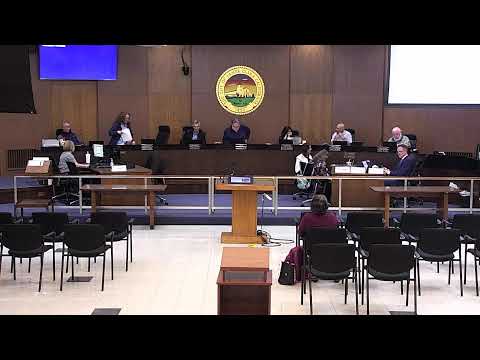
After public comment, the commission voted on a package of recommendations to the City Council. By recorded motions and seconds, commissioners moved to (1) recommend certification of the EIR; (2) recommend adoption of the El Camino Real Specific Plan; (3) recommend amendments to the general plan that create five new corridor land‑use designations (regional corridor mixed‑use; corridor mixed‑use; corridor residential; corridor residential‑low; and a ground‑floor commercial overlay); and (4) recommend adoption of zoning‑code amendments creating El Camino Real zoning districts. All four motions passed; the transcript records the motions as carried but does not list final roll‑call tallies.
The commission directed staff to continue refining implementation details and flagged a need for additional study of parking, possible incentives for master‑plan redevelopment in activity centers, and clarifications of how the state density‑bonus law will interact with local standards. The item was transmitted to the City Council for its consideration in June 2026.