Get Full Government Meeting Transcripts, Videos, & Alerts Forever!
Get email alerts on the Commercial Law topic
No spam. Unsubscribe anytime.
Appeals Court hears lease dispute over cannabis-license clause after tenant did not obtain state license
Summary
McGregor Mills urged the Appeals Court to reject a tenant’s termination notice under an amended lease clause tied to cannabis licensing, arguing the tenant failed to demonstrate it obtained required licenses or that electrical/buildout constraints excused non-application; tenant counsel said no license issued and pointed to building limitations and a February 2022 90-day notice.
In McGregor Mills LLC v. Waveseer (Wayfair Massachusetts LLC), tenant counsel Jaffer Sheik argued the lease’s termination clause (14.3b) permits the tenant to terminate if "licenses necessary for the permitted use at the premises are not issued," and that Waveseer sent a February 2022 notice asserting a license did not issue. Sheik said the tenant began to conclude it could not qualify for licensing because of electrical-capacity limits in the building and therefore sent the 90-day termination notice.
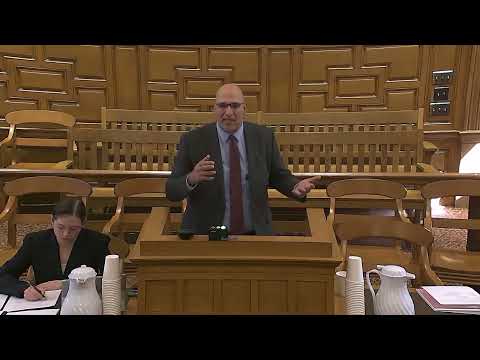
McGregor’s attorney Paul Foley replied that the lease and its titled cannabis-licensing provision plainly refer to state cannabis licensing and that the tenant did not apply for the Cannabis Control Commission license; Foley argued the tenant bore the burden to prove the clause's preconditions were met and that evidence in the trial record showed no application and no contemporaneous complaints about electrical capacity. He said a cannabis operation later operated in the building using the same utilities, which undermined the tenant’s futility argument (Foley acknowledged that detail arose after the trial record and was not admitted at the hearing).
The bench questioned both sides about whether the termination clause requires the tenant to attempt to obtain licenses and whether a second-sentence exception (terminating right not arising if tenant intentionally fails to obtain licenses) shifts the burden of proof. The court also asked about the record's absence of cost estimates for any electrical upgrades and whether post-trial facts about later occupants should affect appellate review. The panel took the case under advisement.