Get Full Government Meeting Transcripts, Videos, & Alerts Forever!
Get email alerts on the Child Welfare topic
No spam. Unsubscribe anytime.
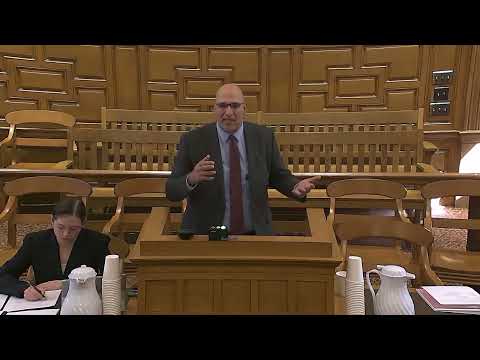
Panel considers whether trial findings supported termination of parental rights in DCF appeal
Summary
Appeals Court heard competing arguments over whether findings about a mother's substance use, mental health and noncompliance supported a forward-looking 'unlikely to remediate' finding required to terminate parental rights; the department and child’s counsel argued the record met the statutory standard, while defense urged vacatur.
Counsel for the appellant mother argued the trial court’s findings — ongoing substance use, credibility concerns, and incomplete treatment — did not establish the forward-looking determination required to terminate parental rights: that mother’s condition was unlikely to be remediated within a period adequate to meet the child’s needs. Counsel emphasized that findings of ongoing problems are not, by themselves, enough for termination unless the judge connects them to a reasonable prediction that remediation will not occur in time for the child.
The Department of Children and Families, represented by Lynn Murphy, replied that the judge made clear factual findings over two years of services showing no sustained improvement: untreated mental-health issues, substance use, and the parent’s continued involvement with the father. The department said those findings supported the judge’s conclusion that termination served the child’s best interests and met the statutory standard.
Child counsel Peter Heffernan urged the court to defer to the trial judge’s discretionary assessment and pointed to precedent explaining when unfitness is properly deemed temporary. The bench asked both sides to identify what additional facts would have been required to support or undermine a forward-looking determination. The court took the case under advisement.