Get Full Government Meeting Transcripts, Videos, & Alerts Forever!
Get email alerts on the Family Law topic
No spam. Unsubscribe anytime.
Appeals Court hears challenge to trial court’s use of 209A order to award custody of adult child
Summary
In a partially impounded matter, counsel argued a trial court lacked statutory authority to award custody of an adult child under G.L. c. 209A; the panel questioned whether temporary guardianship or other probate remedies were available and whether remand or post-argument letters were needed to resolve record gaps.
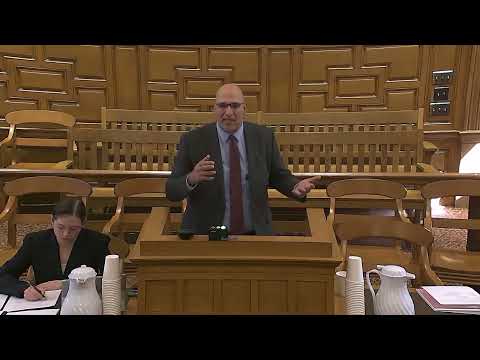
Attorney Kevin Heffernan argued the trial court exceeded statutory authority when it struck custody provisions and granted the appellee custody and contact restrictions over an adult child in an order issued under G.L. c. 209A. He told the panel the statute permits custody orders only for minors and that, even if the adult was disabled, the correct remedy was a guardianship proceeding in probate court rather than a 209A protective order.
The bench pressed whether the mother had been appointed temporary guardian (counsel confirmed she had been appointed temporarily), whether the order had been extended, and whether documentary materials the trial judge relied on (school emotional-assessment documents, a 2021 psychological report, IEP) were in the appellate record. Counsel said some materials were provided to the trial court but did not appear in the appeals record and suggested a post-argument letter could clarify whether extensions and underlying documents existed.
The justices discussed potential remedies if the trial court lacked authority, including whether vacatur or remand would be appropriate. The court did not rule from the bench and took the matter under advisement.