Get Full Government Meeting Transcripts, Videos, & Alerts Forever!
Get email alerts on the Racial Profiling topic
No spam. Unsubscribe anytime.
Appeals Court hears dispute over racial-profiling findings and whether stop lacked legal basis in Commonwealth v. Rula Royan Jones
Summary
In an appeal over a motion to suppress, the panel questioned whether the trial judge applied the correct standard (reasonable suspicion v. probable cause), relied on crediting officer testimony despite missing mobile-data logs, and whether the judge permissibly used FIO stop statistics to infer implicit bias; parties disputed remand necessity.
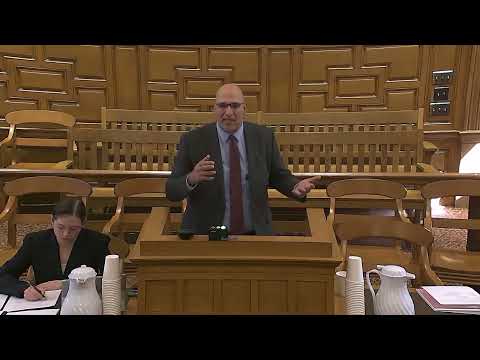
ADA McKenzie Slyman, arguing for the Commonwealth in Commonwealth v. Rula Royan Jones, told the Appeals Court the motion judge erred by treating a reasonable-suspicion inquiry as a probable-cause question and by improperly concluding the stop lacked legal basis. The prosecutor urged the panel to review the judge’s credibility findings that credited officers’ testimony and, on that basis, find reasonable suspicion was satisfied.
A central factual dispute presented to the panel was that the motion judge relied on documentary evidence (absence of a CJIS query and an apparent mistyped plate) to cast doubt on whether a civil motor-vehicle infraction occurred and then used statistical FIO data to consider implicit-bias concerns. The Commonwealth argued the judge’s off-the-bench statistical trimming of records was a legitimate exercise of judicial discretion; defense counsel said the judge’s statistical analysis resembled an expert opinion entered without notice and deprived parties of a chance to respond.
The justices asked whether the passenger had standing to assert an equal-protection claim when the record suggested the officers may not have seen occupants at the time of the stop, and whether flight and other facts justified seizure and pursuit. Veronica White for the appellee urged the court to affirm suppression, arguing the judge properly found the documentary record undermined the existence of a civil infraction and that the totality of the circumstances supported the suppression ruling. The court took the case under advisement after extended questioning.