Get Full Government Meeting Transcripts, Videos, & Alerts Forever!
Get email alerts on the Criminal Justice topic
No spam. Unsubscribe anytime.
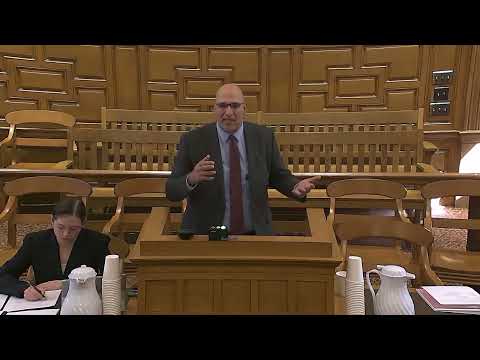
Defense urges Appeals Court to undo plea over alleged lack of immigration warnings in Perez Melgar appeal
Summary
In Commonwealth v. Jaime Perez Melgar, defense counsel told the panel the plea was not voluntary or informed because trial counsel failed to advise the defendant of immigration consequences; the Commonwealth said affidavits, plea colloquy and plea form contradicted the defendant’s claim and urged affirmance.
Philip Webber, representing Jaime Perez Melgar, told the panel that the defendant’s motion to withdraw his plea should have been allowed because the plea was not entered voluntarily or with adequate, timely advice on immigration consequences. Webber said the defendant had limited contact with plea counsel, the defendant’s affidavit was credible, and that a short, high-pressure courthouse colloquy and a signed plea sheet did not cure an absence of prior, informed advice.
The justices probed whether the motion judge could decide on affidavits alone, whether an evidentiary hearing should have followed, and whether the existence of a signed green sheet and plea colloquy meant the court was bound by the defendant’s in-court affirmations. Webber argued that, in the totality of the circumstances — including weaknesses in the underlying case and the pressure on a first-time defendant — the affidavit and record warranted relief.
Assistant District Attorney Stacey Gauthier replied that the record contradicted the defendant’s affidavit: plea counsel executed a counter-affidavit, a contemporaneous plea colloquy occurred and a tendered plea form existed. She said the judge permissibly denied the motion on the affidavits and that an evidentiary hearing is discretionary unless the judge finds a substantial issue requiring one.
The panel questioned both sides about whether the record supported remand for an evidentiary hearing; after extended questioning the court took the case under advisement.