Get Full Government Meeting Transcripts, Videos, & Alerts Forever!
Get email alerts on the Criminal Justice topic
No spam. Unsubscribe anytime.
Defense tells Appeals Court language barrier undercut DUI evidence in Commonwealth v. Tenizaca Pacuay
Summary
In Commonwealth v. Diego Tenizaca Pacuay, defense counsel told a three-justice panel the Commonwealth relied on English-only field sobriety instructions and a 'seven beers' admission from a Spanish-only speaker to secure a conviction, and urged suppression and insufficiency rulings; the Commonwealth responded that community-caretaking and trial evidence supported its case.
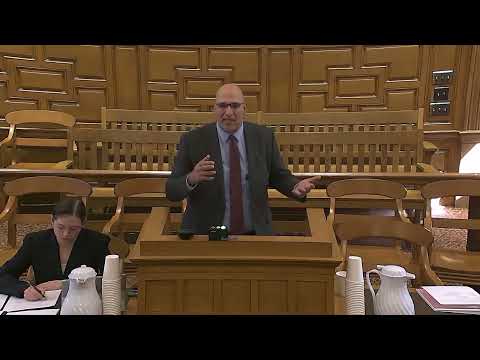
Defense counsel Daniel De Maria told the Massachusetts Appeals Court that the prosecution "conducted an entire investigation in English against a man who only spoke Spanish, and then used his inability to speak and to understand as proof of guilt." He argued field sobriety tests were administered in English, and that the defendant’s failure to follow instructions reflected lack of comprehension rather than intoxication.
The panel pressed whether those issues were for a jury or for pretrial legal rulings. Justice Henry noted the distinction between whether evidence is weighty enough for conviction and whether it meets a legal threshold of probative value. De Maria sought reversal of a suppression ruling and argued the motion judge’s factual findings about language ability were clearly erroneous.
Kyra Cascio, for the Commonwealth, said the initial encounter was justified by the community-caretaking doctrine and that Miranda warnings were not required at the point the officer first spoke with the defendant. She told the court that the officer demonstrated sobriety tests in both languages at times, that the defendant said “sí” when asked if he understood, and that the trial record included red or glassy eyes, slurred speech and an admission of having consumed seven beers.
The bench questioned both sides about case law and whether the record contained materially different facts between the suppression hearing and trial. The panel cited SJC authority on custodial interrogation and Miranda limits, and asked whether any legal standard or credibility findings required remand for further factfinding. After follow-up with both counsel, the court took the case under advisement.
The panel did not rule from the bench; it signaled the issues it considered most significant were whether the stop and subsequent questioning required Miranda warnings and whether the field sobriety evidence retained sufficient probative value given the language concerns.