Get Full Government Meeting Transcripts, Videos, & Alerts Forever!
Get email alerts on the Transit Reform topic
No spam. Unsubscribe anytime.
Transit reform bill sent to conference after objections to Senate changes
Summary
Committee discussion of HB 1081 (Maryland Transit Administration Reform Act) described Senate changes that removed eminent‑domain, procurement and tort-cap provisions, created two new boards and directed a study; the chair initially moved to concur but Delegate Grammer objected, and the committee agreed to pursue conference options.
House Bill 1081, the Maryland Transit Administration Reform Act, drew disagreement in the House Environment and Transportation Committee over Senate changes and will move toward a conference process.
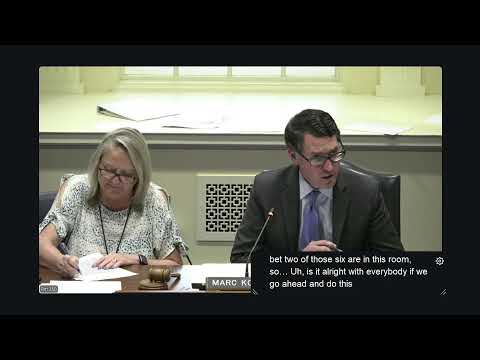
Chair Lewis described the Senate substitute and said it "creates a Baltimore City services board and a commuter rail and commuter bus services board, and has a study on a potential passenger rail authority." She acknowledged that several provisions that drew attention on the House floor — changes related to eminent domain, procurement and tort caps — were removed in the Senate substitute. At one point the chair referred to the legislation as her "beautiful baby."
After the chair moved to concur with the Senate substitute, Delegate Grammer registered opposition, saying the changes effectively watered down the bill. Members discussed whether to stand firm or send the matter to conference. The committee recorded Delegate Grammer's opposition and agreed to pursue a conference committee rather than immediately concur.
Why it matters: HB 1081 proposes structural changes to transit governance in Maryland, including the creation of boards focused on Baltimore City services and commuter rail and bus services and a directed study on a passenger rail authority. The presence and removal of provisions on eminent domain, procurement and tort caps were the central points of contention in committee.
What's next: The committee did not produce a final concurrence on the floor substitute; members agreed to pursue conference options to resolve remaining disagreements.
Sources: Committee remarks and the committee's vote to pursue conference action.