Get Full Government Meeting Transcripts, Videos, & Alerts Forever!
Get email alerts on the Environment Minerals topic
No spam. Unsubscribe anytime.
Residents and intervenors challenge Hot Springs’ letter to federal agencies over proposed uranium exploration
Summary
Public commenters and intervenors told the City Council the council’s letter to federal land managers on the October Jinx exploratory project included new statements beyond earlier resolutions and may have procedural and factual flaws; council said it will consult attorneys and may revisit the matter.
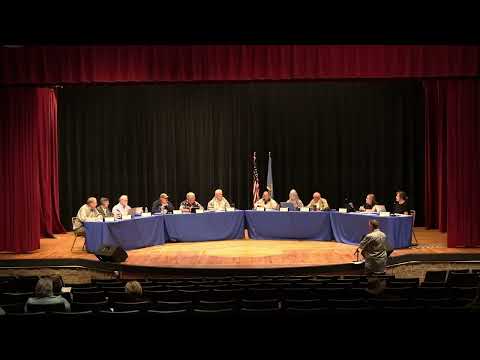
Frank Burkel told the Hot Springs City Council that a letter the city sent to federal land managers about the October Jinx exploratory project contained “materially false statements” and may not have been approved through the ordinary process for formal council positions. Burkel said the letter went beyond prior city resolutions and raised legal and factual questions that should be reviewed by the city attorney.
Several council members and staff responded that the letter had been included in the meeting packet and that the council had previously expressed opposition to uranium mining in other actions. Ben Sharp, an intervenor in the state minerals-and-environment hearing, told the council he did not believe the letter contained false statements but acknowledged that the letter included new language and that its procedural history may not have been clear to all recipients.
The exchange focused on two separate concerns: whether the content of the letter was factually incorrect, and whether the council followed appropriate procedure before sending a letter that added new language beyond prior resolutions. Speakers pointed to a Fall River County ordinance—previously approved by county voters—declaring uranium mining a nuisance; some argued the council’s letter used that local expression of public concern as evidence, while others said the board hearing could treat the county measure as irrelevant unless the board accepted it as material evidence.
Mayor Bob Nelson and other council members said they would consult the city attorney about whether the letter’s content and approval process complied with the city’s rules and legal requirements. Multiple speakers asked the council to consider whether the letter should have undergone a formal two-reading process or been framed strictly as reiteration of prior resolutions. The council did not take any immediate additional votes; officials said staff and the city attorney would follow up and that intervenors and interested citizens would be invited to provide additional documentation or testimony if needed.
The council’s discussion occurred during the public-comment segment and included detailed references to past local resolutions and to filings made to the US Forest Service and Bureau of Land Management. Council members and intervenors requested clarity on whether the city intends to treat the letter as a policy position to be enforced by future votes, or as a submission of commentary assembled for the federal record.