Get Full Government Meeting Transcripts, Videos, & Alerts Forever!
Get email alerts on the Education Autism Certification topic
No spam. Unsubscribe anytime.
Puerto Rico House education hearing exposes gaps in autism certification plan
Summary
Lawmakers heard that the Department of Education and the University of Puerto Rico run pilot certification courses but that Law 163 (2024) requirements, funding details and enforcement records remain incomplete; advocates urged mandatory, interagency action and the committee requested data within five business days.
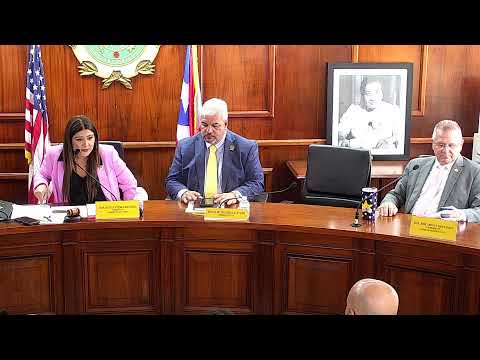
The Puerto Rico House Commission on Education heard nearly four hours of testimony April 7 on Joint Resolution 132, which would direct the Department of Education, in partnership with the University of Puerto Rico, to develop a professional certification program for teachers and staff who serve students with autism spectrum disorder.
Committee President Tatiana Ramos Pérez opened the session by asking witnesses to be concise and by setting a five-business-day deadline for requested documents, warning that failure to comply could be treated as noncompliance with the legislature.
The Department of Education, represented for the hearing by Lic. Saraí Ruiz Maonet (reading for Secretary Elier Ramos Párez), told the committee it has already implemented multiple initiatives: a January 2025 guidance document on behavioral supports, an 18-credit certification program with UPR, 40-hour training for registered behavior technicians and outreach campaigns. Ruiz Maonet cited March 2025 figures showing the first certification cohort enrolled 417 teachers with 387 active participants and said the department now counts about 503 teachers impacted by those programs. At the same time, she said a mandatory, single-institution certification would require regulatory amendments, curricular validation and an allocation of resources to be feasible.
"The department recognizes the importance of strengthening the capacities of staff who attend students diagnosed with ASD," Ruiz Maonet said in the reading. "However, the current certification framework does not contemplate a single professional certification of the type proposed, and implementation would require evaluation of the regulatory framework and budgetary resources." (Represented by Saraí Ruiz Maonet.)
Advocates from the Alianza de Autismo de Puerto Rico pressed a different point. Joyce M. De1vila, executive director of the alliance and a parent of an adult with autism, cited CDC and local studies and told the committee the 2024 law (Law 163) already mandates mandatory training and interagency mechanisms under Article 21. De1vila urged the committee to obtain five years of interinstitutional meeting records and attendance lists to determine whether agencies are meeting statutory duties.
"Article 21 requires that training for providers who interact with this population be mandatory," De1vila said. "We have a committee established by law, but many agencies have not amended regulations to comply. We ask the commission to require those records." (Joyce M. De1vila, Alianza de Autismo de Puerto Rico.)
University of Puerto Rico officials described course offerings and implementation capacity. Dr. Sayira Jorde1n Conde, president of the UPR campus that presented to the committee, said UPR offers six-credit modules in multiple recintos that combine into an 18-credit pathway and has provided 40-hour training options. She said the UPR holds designated funds for training (UPR described a $10 million annual allocation available through a standing fund) but warned that a 60-day deadline in the resolution to present an implementation plan is tight; UPR recommended an extended timeline (roughly 120 days) and a formal collaborative agreement that spells out responsibilities and a specific budget allocation.
Parents and school staff described uneven access on the ground. Mareda Vera Carire, a mother of a young adult with Level 3 autism, detailed classrooms that lack basic resources; school directors and special-education teachers said many schools still operate without certified autism specialists despite rising enrollment in special education.
Committee members pressed for specific numbers. Janet Lf3pez de Jesfas, a Department of Education official who answered on the record, gave the figure 5,693 as the current number of active special-education teachers in the system and acknowledged only about 503 teachers had completed the most recent certification offerings to date. Members asked whether the certification proposed by the resolution would become mandatory for all 5,693 teachers or be phased by cohort; DOE representatives said current UPR and DOE efforts were programmatic and voluntary but that they planned additional cohorts to expand coverage.
Lawyers and advocates emphasized legal alignment and enforcement. José Gil Colf3n, legal counsel to the Alianza, and other witnesses argued the existing statute contemplates a transdisciplinary certification informed by medical metrics (DSM-5, ICD-10) and further regulated by health-sector examining boards; they warned a narrowly written resolution could create statutory duplication or conflict unless coordinated with the interagency committee already created under Law 163.
Funding, attrition and quality assurances were recurring themes: witnesses said the DOE currently pays for teacher participation in cooperative training with UPR, that some funds are held within UPR accounts with specific use limits, and that there is not yet a standardized mechanism for tracking mid-course dropouts or enforcing a five-year retention requirement that appears in some program materials.
The committee concluded the hearing by asking DOE and UPR to provide the requested documentation within five business days: a region-by-region list of certified teachers, the number and location of classrooms designated for autism supports, the exact breakdown of the $10 million training fund and any letters to the Fiscal Oversight Board requesting prior-year funds. Presidenta Tatiana Ramos Pe9rez also signaled possible follow-up oversight and an investigation into whether agencies have issued the regulations the 2024 law requires.
What comes next: the committee will review the documents it requested, and members indicated they will consider amendments to the resolution to clarify timelines, funding sources and the relationship between the proposed program and Law 163.
(Reporting from the April 7, 2026 public hearing of the Puerto Rico House Commission on Education; quotes attributed to witnesses by name and role as stated on the record.)