Get Full Government Meeting Transcripts, Videos, & Alerts Forever!
Get email alerts on the Charter Revision topic
No spam. Unsubscribe anytime.
Bridgeport residents press City Council over charter revisions, ethics office and alleged procedural lapses
Summary
At the Aug. 4 public speaking session, residents urged the Bridgeport City Council to adopt a regular charter-review schedule, fully fund a municipal ethics office with outside counsel, and address claims the Charter Revision Commission failed to hold a statutorily required hearing under section 7-191A.
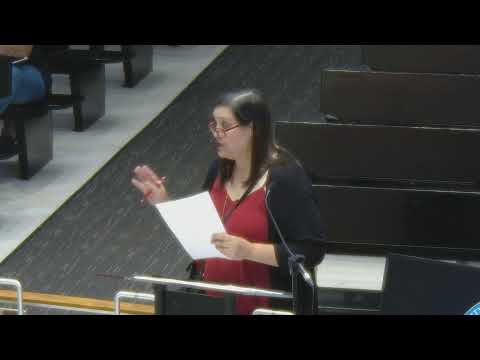
Bridgeport — At the Bridgeport City Council public speaking session on Aug. 4, residents urged council members to tighten the city’s charter-review process, to back a fully funded municipal ethics office and to examine whether the Charter Revision Commission followed statutory procedures.
Faith Sweeney, who identified herself as a Huntington Turnpike resident, recommended the council set a regular charter-review cycle of every seven to ten years rather than the current 13-year gap and called for "a strong ethics office" with a director and consideration of outside counsel. "A strong ethics office is critical for maintaining public trust and ensuring that the city operates with integrity," Sweeney said.
John Hoer, a local resident, praised the ordinance committee co-chairs for moving charter recommendations forward but urged the council to ensure the charter remains "a living document" and to preserve citizens’ right to the final say on any changes.
Maria Pereira raised a procedural objection to the charter commission’s submission, citing "section 7-191A" and telling the council that the commission was required to hold two specific hearings: one before beginning substantial work and another before transmitting a final report to the city clerk. Pereira said the commission adopted its report on June 16 but did not hold the second hearing before transmission, and she argued that omission could render the submission legally defective. "The statute was not adhered to," she said.
Pereira also said the charter commission’s membership included a larger share of public officials than she believes was permitted by the rules governing the commission’s makeup; she described that as problematic for the process. None of the speakers reported a formal council response during the session.
Why it matters: Charter changes can reshape city governance and the balance between executive and legislative functions. Speakers framed the issues as both procedural (whether the commission followed statutory steps) and substantive (how often the charter should be reviewed and how ethics enforcement should be structured and funded).
What happens next: Speakers urged council members to consider these procedural and policy questions as the council reviews the charter commission’s recommendations; no vote or formal council direction on the issues was recorded during the public speaking session.