Get Full Government Meeting Transcripts, Videos, & Alerts Forever!
Get email alerts on the Economic Development topic
No spam. Unsubscribe anytime.
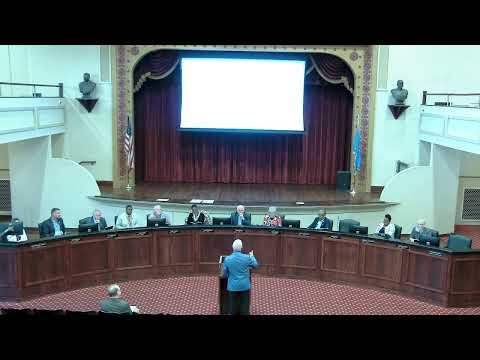
Lawton council unanimously approves land sale and term sheet to advance Firehawk Aerospace project
Summary
In a special meeting the Lawton City Council approved a resolution to buy roughly 320 acres and a separate term sheet to enable construction of a Firehawk Aerospace manufacturing facility, advancing state-backed financing and an employment-tied lease structure by 7-0 votes.
At a special meeting the Lawton City Council voted unanimously to approve two resolutions designed to move the Firehawk Aerospace manufacturing project forward: one authorizing the acquisition of about 320 acres from the Comanche County Industrial Development Authority and a second approving a term sheet that outlines project financing and operational covenants.
Richard, executive director of the Lawton Economic Development Authority (LEDA), said Firehawk would be an energetics manufacturer expected to create about 100 jobs with an average wage of $93,500. He said the Oklahoma Development Finance Authority has awarded a $22 million grant that will fund the lion’s share of initial construction costs: “the state of Oklahoma is investing $22 million into the City of Lawton with this project,” Richard said.
City staff described the land deal as a sale from CCIDA to LEDA structured with a down payment of $500,000 and further payments of roughly $1.1 million spread over four years, with those follow-on payments to come from tax increment financing (TIF) revenue beginning two years after closing. Officials explained that because CCIDA is tax-exempt the incremental property taxes generated by Firehawk would be largely captured by the TIF district once activated and used to repay the CCIDA loan and other obligations.
Tim, a city staff member, told the council the bridge financing and loan structure would not place city general-fund dollars at risk: “I want to make sure that's clear that city money will not be in jeopardy for this,” he said, describing the immediate construction loan as a bridge expected to be reimbursed by state funds.
The approved term sheet includes a lease and employment-based forgiveness mechanism. According to staff, the lease carries a total payment obligation of about $3.5 million with annual amounts that are reduced as Firehawk documents employment levels; at $4,000 per employee per year, achieving 100 employees would eliminate the annual lease obligation described in the term sheet. Staff also estimated the TIF revenue available to the project would be roughly $18 million over 25 years.
Council member Williams asked for clarification about TIF during the discussion; officials explained that activating a TIF district captures the increase in property tax revenue generated by new development for a fixed period (25 years in this case), and that the council would take a later resolution to activate the specific district after closing on the property.
Both resolutions required and received the council’s affirmative votes. The mayor reminded the body that, because the measures create a form of indebtedness, six affirmative votes were required for passage; the motions carried on recorded tallies of 7-0. Following the votes, the council moved to adjourn.
What happens next: staff said closing and subsequent steps to activate the TIF and finalize definitive agreements would follow the approvals; council did not set specific public hearings or additional deadlines during the special meeting.