Get Full Government Meeting Transcripts, Videos, & Alerts Forever!
Get email alerts on the Municipal Budget topic
No spam. Unsubscribe anytime.
Committee advances emergency 2026 operating ordinance after debate over neighborhood priorities and food access
Summary
Cleveland’s finance committee advanced Ordinance 117‑2026, a reconciled 2026 operating appropriation, after extended committee questioning about carryover transfers, neighborhood equity funding, food insecurity and Cleveland Public Power investments. Members signaled follow‑up oversight and potential transfer ordinances.
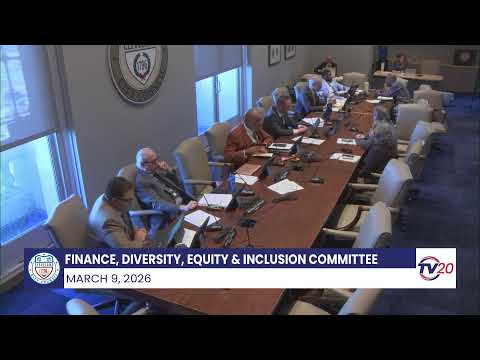
The Committee of Finance, Diversity, Equity and Inclusion advanced an emergency operating ordinance (No. 117‑2026) that reconciles departmental budgets and adds council-requested amendments, but several members insisted more neighborhood‑focused spending is needed.
Council President (chair) opened the item and said all amendments were available on committee tablets; the finance director then summarized the reconciliation package, calling it “fair” and listing specific additions including $699,000 for park maintenance hires, $75,000 for an additional council event per ward, $250,000 for the Sprout/Sprouts food program, a headcount for prisoner billing, an electrical safety inspector ($88,400), and roughly $4.5 million in transfers to neighborhood funds (about $300,000 per ward) plus other allocations such as $50,000 for police districts and approximately $868,535 for a receivership program.
The director explained the city will use about $7.894 million of carryover to fund the reconciliation items, which reduces the amount backing capital transfers from roughly $90 million to about $82 million; he said the administration will include an $8 million resurfacing allocation in the CIP. “Instead of actually cutting funding from a different division, we figured we would fund from that,” he said.
Several council members pressed for clearer investments to address food insecurity and neighborhood needs. Councilman Richard Star urged larger, targeted dollars for grocery access and neighborhood programs, noting that his ward still lacks a grocery store: “we don't have a grocery store in Central and we haven't had one since 2016,” he said, and warned he would “give strong consideration” before voting on the ordinance.
The council president pointed to a $250,000 allocation for the Ohio State Extension Program and said the Health Department now has a staff person focused on food insecurity. He urged council members to work with department directors to develop specific program plans and noted operating budget and capital plans are separate vehicles.
Members also questioned legal aid funding and ARPA reallocations; staff said legal aid faced capacity constraints and that some unspent medical‑debt ARPA funds were being considered to shore up housing‑court representation. On parks, members requested operational hearings to understand how new maintenance positions would be used.
Committee members signaled they expect continued oversight after the ordinance reaches the full council; the chair reminded members that second reading would occur that evening and that some items could be adjusted with transfer ordinances if necessary.
The committee moved the ordinance to the full council with the amendments under consideration; committee discussion made clear that several members want follow‑up briefings and detailed implementation plans on food access, neighborhood equity spending and Cleveland Public Power infrastructure before final appropriation decisions are implemented.