Get Full Government Meeting Transcripts, Videos, & Alerts Forever!
Get email alerts on the Charter Schools topic
No spam. Unsubscribe anytime.
Experts and advocates clash over charter oversight after committee hears evidence of closures and alleged fraud
Summary
The committee heard an MDE overview and testimony from researchers and former officials documenting charter-school closures and alleged financial misconduct; the charter sector defended its role while lawmakers called for better authorizer transparency and follow-up oversight.
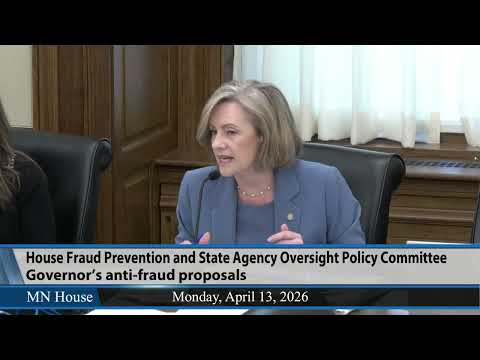
The House Prevention and State Agency Oversight Committee turned to charter schools after the governor's fraud package hearing. A Department of Education official briefed the panel on the state's role and the role of authorizers; the department said Minnesota has 173 charter schools serving approximately 70,000 students and that authorizers handle initial approval, oversight and renewal decisions under Chapter 124E.
Professor Myron Orfield, a University of Minnesota law professor who has researched charter performance and closures, told the committee that charter-school oversight in Minnesota has historic gaps. He said he identified 39 charter closures since 1995 and that, for the subset of closures with available public records, a sizeable share involved criminal prosecutions or serious financial mismanagement. He cited investigative reporting about the Harvest Prep network and an unaccounted $6 million grant tied to the Synergy Residential Academy as examples of regulatory failure.
Nelson INS, a former Minneapolis School Board member, described funding mechanics he said create opportunities for manipulation. He explained that special-education reimbursement operates as a partial-cost system and that districts can be billed for services based on another school's determinations, creating cross-subsidies and opportunities for uneven accounting.
The charter sector's trade association responded. Joey Chen, executive director of the Minnesota Association of Charter Schools, emphasized that charter schools are public, tuition‑free and subject to annual audits, public‑records laws and authorizer contracts enforced by the Minnesota Department of Education. Chen said the sector condemns misuse of public funds and urged thorough enforcement against individuals who break the law while noting that many charter schools serve higher percentages of students of color and students qualifying for free and reduced-price lunch.
Why it matters: MDE's overview and subsequent testimony framed a tension at the center of charter policy: authorizers and the department carry oversight responsibility, but multiple witnesses and media reports said accountability gaps have allowed fraud and mismanagement to persist in some cases, sometimes with large financial consequences. Lawmakers asked for follow-up work on transparency, authorizer duties and mechanisms for earlier detection of financial misconduct.
What comes next: Committee members asked for additional hearings and follow-up documents. Several members said they want deeper analysis of authorizer oversight, public records related to charter closures, and potential statutory changes to strengthen financial oversight and transparency of authorizers.