Get Full Government Meeting Transcripts, Videos, & Alerts Forever!
Get email alerts on the Economic Impact topic
No spam. Unsubscribe anytime.
Witnesses tell Minnesota committee Operation Metro Surge cost businesses, schools and cities millions; lawmakers hear push for House File 4477
Summary
Business owners, mayors, school leaders and advocates told a Ways and Means Committee hearing that Operation Metro Surge depressed hours worked, reduced customer traffic and imposed unexpected municipal costs; witnesses urged passage of House File 4477, a targeted small-business relief bill, while the committee took no vote.
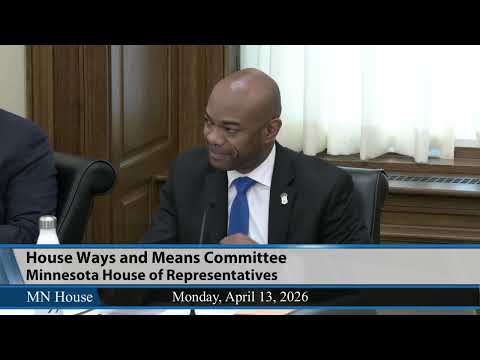
A Minnesota Ways and Means Committee hearing heard testimony from city leaders, business owners, educators and advocates who said Operation Metro Surge produced immediate economic harms—lost wages, shuttered or reduced‑hour businesses, extra municipal expenditures and school enrollment declines—and urged state aid in the form of House File 4477.
Testifiers presented data and local accounting that they said show the scale of the harm. Erin Rosenthal, research director at North Star Policy Action, said the group’s analysis found January 2026 job losses concentrated in accommodation and food services, with 3,300 jobs lost in that sector and the largest non‑pandemic monthly drop on record. "On average Minnesotans worked 32.1 hours in January 2026—the lowest number on record," Rosenthal said, and she estimated a roughly 2% drop in hours between early January and mid‑February translating to at least $106 million in lost wages.
Local officials testified to city and municipal costs. Minneapolis Mayor Jacob Frey described a preliminary city analysis that put total impacts to the city at about $203 million, including $47 million in lost wages and $81 million in small‑business losses. "We are contributing approximately $7 million to bring small businesses back," Frey said, describing grants, corridor activations and temporary fee and licensing relief the city is pursuing to revive foot traffic and reopen businesses.
Saint Paul’s mayor (self‑identified) told the committee the city recorded nearly $1 million in additional costs and more than 10,800 staff hours responding to the operation; he urged swift state support. Brooklyn Park Police Chief Mark Truly recounted encounters in which officers and residents reported being stopped by federal agents who concealed identity and removed phones; he said his city tracked about $24,000 in direct response costs and broader emergency supports that pushed local spending into the hundreds of thousands.
School leaders described disruptions to students and school budgets. Dr. Brenda Lewis, a superintendent, said her district saw a peak loss of 112 students in December and still had about 72 students absent at the time of testimony; she said the district launched rapid virtual‑learning options and estimated direct fiscal losses of "well over a million dollars," including lost nutrition reimbursements and nearly $1.5 million in compensatory aid impacts if not mitigated.
Small‑business owners and community lenders urged a targeted, flexible relief program. Lee (CEO of Women Venture) and other CDFI representatives said community lenders are extending and restructuring credit but cannot absorb a systemic shock of this size; they urged lawmakers to prioritize grants for payroll, rent and operating expenses rather than debt. "This is not a normal economic downturn—this is a convergence of pressures," the Women Venture representative said, asking members to back House File 4477.
Several small‑business owners reported steep, documented revenue losses. One restaurant owner said fear emptied dining rooms in December and January; another witness said their business lost an estimated $36,000 over 12 weeks. Testimony from advocates and from the Children’s Defense Fund highlighted trauma and toxic stress for children who witnessed armed and masked agents in neighborhoods, and called for paired investment in mental‑health and school supports.
Committee members asked for more accounting of overtime and municipal costs; Mayor Frey said Minneapolis would provide additional detail on police overtime and reiterated the city’s $7 million support package. Chairs indicated they intend to put a number of financial bills, including relief proposals, on the Ways and Means calendar but took no formal votes at the hearing.
The hearing combined quantitative analysis and first‑hand accounts to make the case for a state response: witnesses asked legislators to consider one‑time grants, streamlined eligibility, and investments in mental‑health and school recovery services. The committee adjourned with plans to continue review of financial bills and requests for additional documentation from cities and school districts.