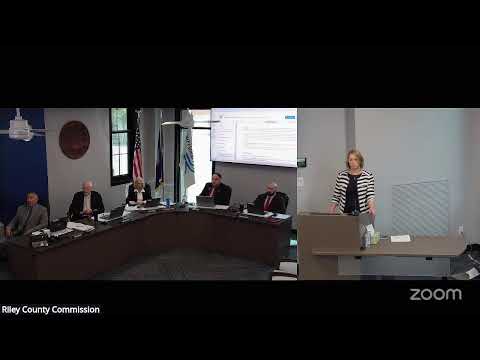
Riley County imposes 180‑day moratorium on data centers and battery storage while staff drafts rules
Summary
Riley County commissioners on April 13 voted to impose a 180‑day moratorium on data centers and battery energy storage systems so planning staff can research code standards, safety issues and community impacts before permitting those uses.
Amanda Webb, Riley County planning director, told the commission the county has no existing zoning code for data centers or battery energy storage systems and urged the board to choose whether to prohibit them, permit them under new standards, or pause approvals while staff writes rules.
"Our code doesn't just outright prohibit things that aren't listed," Webb said, recommending clear permitting criteria — likely a conditional‑use or special‑use process — so the county can evaluate proposals consistently.
Commissioners said they wanted time to learn more about the land‑use, energy and fire‑safety implications before decisions are made. One commissioner said a moratorium would give staff and the public time to gather information without reacting to a single proposal.
The board directed staff to implement a 180‑day moratorium while researching model ordinances, technical impacts and stakeholder input. Webb said she would consult other jurisdictions, review examples and return with draft code language for public hearings and planning commission review.
The moratorium is intended as a time‑limited pause, not a decision to ban or permanently allow the uses. Commissioners discussed potential extensions if more time is needed and noted the moratorium could be tailored to a specific period (the staff discussion referenced 120‑ and 180‑day examples from other counties).
Next steps: planning staff will assemble model code options, fire‑safety and energy impact information, and public‑engagement materials and report back to the commission for direction and possible ordinance drafting.
AI generated
The text on this page is AI generated. Summaries, highlights, analysis, and video transcripts are all produced from the original source material.
AI can make mistakes, so if you spot one, and we will fix it for everyone.
Note: the source content is unaltered by us. Any content source we link to, be it a video, an audio recording, or a document, is presented exactly as its publisher released it. That publisher is usually a government body, sometimes an individual official or another organisation.