Get Full Government Meeting Transcripts, Videos, & Alerts Forever!
Get email alerts on the Education Dual Language topic
No spam. Unsubscribe anytime.
Parents, teachers and language experts urge Urbana SD 116 to limit split‑grade and large dual‑language classes at Yankee Ridge
Summary
Parents, teachers and University of Illinois experts told the board that sustaining multi‑grade (split) classrooms and a proposed second/third grade class of 26 students in the French dual immersion program risks producing receptive‑only language skills and academic delays, and urged staffing changes or class‑size limits.
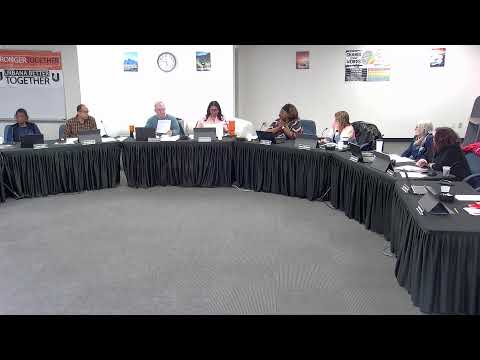
Public commenters packed the boardroom Tuesday to press Urbana School District 116 to change how it staffs French dual‑language classes at Yankee Ridge, saying extended years in split‑grade (multi‑grade) classrooms is hurting student learning.
"The larger the class, the more the proficiency of students tends to be receptive only," said Anna Mendoza, a professor in the University of Illinois Department of Linguistics, urging the district to reduce a planned split second/third grade class slated to reach 26 students. Mendoza said productive language skills — speaking and writing — require frequent individual elicitation that is unlikely in a large split class.
Other speakers combined professional research and local classroom experience. "We need a ratio of one teacher to 10‑15 students in the classroom — this is not me saying it, this is research," said Aurora Morose, a French language acquisition professor, who described dual immersion as rare and valuable while cautioning that quality depends on manageable class sizes.
Parents and teachers described concrete impacts on grade‑level instruction and state assessments. Florence Matthew, a first‑grade French dual‑language teacher, said district MAP math results show many students in repeated split classes scoring below 60 percent and warned that consecutive years in combined classrooms are not sustainable. "With 60 minutes of class per day that only gives 30 minutes of math for each grade for split classrooms," she said, asking the board to allocate additional staff or reconfigure assignments so students can complete grade‑level standards.
Several parents urged the board to adopt a specific limit on how many years a child may be placed in a split classroom and to keep temporary bilingual teachers on staff as enrollment grows. "If the classes truly are too small to support a single‑grade class we need to provide additional staff for math intervention," one parent said.
Board members listened and asked for enrollment data and staffing projections; the public commenters repeatedly requested a district plan to phase out long‑term split placements and to preserve the dual‑language program's quality rather than trimming resources.
The board did not take formal action on the dual‑language staffing plans during the study session. Next steps: board members requested data and said they will bring feedback back to district administration for consideration at a future meeting.