Get Full Government Meeting Transcripts, Videos, & Alerts Forever!
Get email alerts on the Library Funding And Facilities topic
No spam. Unsubscribe anytime.
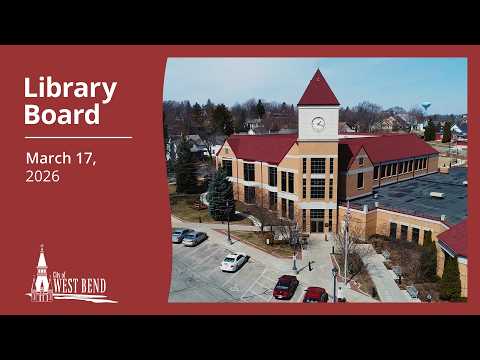
West Bend Community Memorial Library Board discusses hours, collections and costly HVAC assessment
Summary
At its March 17 meeting, the West Bend Community Memorial Library Board reviewed audit and finance items, weighed options to restore weekend hours, highlighted underfunding in collection spending, and ordered an assessment of an aging HVAC “mammoth” unit that could require major capital work; shelving arrives April 13–15.
The West Bend Community Memorial Library Board met March 17 and approved the meeting agenda and the minutes from Feb. 17 before turning to finance, operations and facilities updates that could affect hours, collections and the building’s capital needs.
Joseph Vogl reported the library received three large deposits since the last meeting — gifts from the Friends of the Library, the West Bend Insurance Company Charitable Fund, and Delta Defense for summer‑reading support — and said the board renewed a 13‑month certificate of deposit at roughly 2.4 percent. “We did receive checks from Dodge County and Washington County so far,” Vogl said, referring to reimbursements for circulation costs. He urged staff to follow up on an outstanding insurance payment tied to shelving work; the board confirmed a 50 percent deposit had been paid toward shelving and the remaining vendor invoices must be finalized before insurance reimbursement is requested.
Why it matters: revenues and one‑time reimbursements affect how much of the operating budget can be used for programs, hours and collections. The board noted an $81,000 audit carryover that may be designated to a non‑operating fund balance but did not record a final accounting decision at the meeting.
On operations and strategic planning, Director Steve (identified in discussion as the presenter of the director’s report) walked the board through state library standards and a short set of performance metrics he flagged as priorities: hours open, full‑time staffing, materials expenditure per capita, collection size and turnover. He said West Bend is classed as a Class 1 library but is below the Tier‑1 hours threshold (63 hours per week) and that restoring Saturday hours is challenging given current staffing and funding levels. “We would benefit greatly by having extra hours on Saturday,” Steve said, adding that municipalities are often receptive to funding that keeps buildings open and accessible.
The director presented collection figures that underscored the funding gap: West Bend’s materials‑expenditure per capita was reported at $457, compared with a Monarch average of $992; he noted Tier 1 requires $537 per capita, with higher tiers at $642 and $857. Steve said the library is a net borrower within the system and relies heavily on interlibrary loan; he described ongoing “weeding” to remove low‑use items and prioritized buying higher‑turnover, higher‑quality materials rather than keeping dated stock.
Facilities was a central topic. Staff reported a chiller unit has arrived in West Bend but awaits installation until weather permits. The board also discussed a long‑running concern about the building’s large HVAC, referred to in the meeting as the “mammoth” unit. The capital improvement budget currently lists $40,000 that could be applied to assessment or partial repairs, but recent estimates cited in discussion placed full replacement at a substantially higher figure — roughly a half‑million to a million dollars, depending on scope and what components could be replaced versus a full system swap. The board asked building staff to complete an assessment and propose a maintenance/replacement plan before committing major borrowing for full replacement.
There was also a short facilities update on fire and safety systems: the new fire panel work added about $9,000 because the library’s notification system was outdated and required extra parts. The board heard a schedule for shelving delivery: new lower, wheeled shelves are expected April 13–15. Director Steve described plans to move adult non‑fiction downstairs, create better sight lines for family and children’s areas, and present a detailed timeline for moving units and temporary storage to the board in April.
What was decided: the board approved the meeting agenda and minutes and asked staff to return with a plan and timeline for shelving installation, and with a diagnostic and cost estimate for the mammoth HVAC unit. No formal vote was taken to commit capital funds for HVAC replacement; the $40,000 CIP allocation was described as available for assessment or staged work.
Other business: the chair introduced new deputy director Jennifer You to the board and the group thanked long‑serving member Brett Burquist, who will not seek re‑election to council and was recognized for six years on the board. The board scheduled its next regular meeting for April 21 and adjourned.
Next steps: staff will (1) follow up on the insurance reimbursement and final shelving invoices, (2) produce a timeline and layout plan for shelving moves timed to the April delivery, and (3) obtain a formal assessment and repair/replacement estimate for the mammoth HVAC unit to inform any capital‑budget decisions.