Get Full Government Meeting Transcripts, Videos, & Alerts Forever!
Get email alerts on the Economic Development topic
No spam. Unsubscribe anytime.
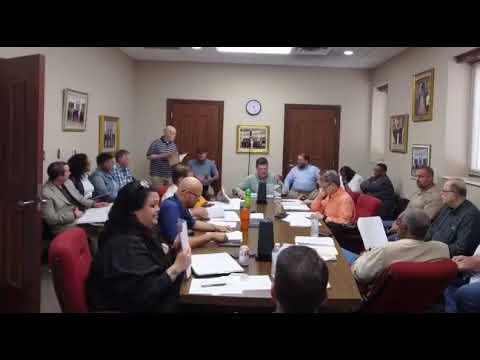
Jackson council hears proposal to reaffirm JDRC authority over downtown PILOT deals
Summary
Consultant Jerry Stover briefed the Jackson City Council on a resolution to reaffirm and delegate payment-in-lieu-of-tax (PILOT) and other financing authority to the Jackson Downtown Redevelopment Finance Corporation, and proposed adding mayoral review for certain projects; no final vote was recorded in the transcript.
Jerry Stover, the presenter on behalf of downtown redevelopment interests, told the Jackson City Council the Jackson Downtown Redevelopment Finance Corporation (JDRC) was created in 2000 to incentivize redevelopment by freezing property taxes for qualifying projects and leasing property back to developers for a 10-year period.
Stover said a 2017 statutory amendment required an additional affirmation of delegations that could affect other taxing entities and that the city should formally delegate authority to the JDRC so the corporation can continue negotiating payment-in-lieu-of-tax (PILOT) economic incentive agreements. “Jackson Downtown Redevelopment Finance Corporation was formed back in 2000 … to provide a vehicle to freeze property taxes to incentivize the redevelopment of the downtown area,” Stover said.
He described the JDRC review criteria as focused on (1) expanding the tax base so properties return to the rolls after the PILOT period and (2) promoting employment through project operations. Stover walked council members through the mechanics: if approved, title to permanent real property is transferred to the JDRC, it becomes tax-exempt, the city leases the property back under a 10-year agreement and the owner pays a locked-in payment during that period; ordinary taxation resumes after the term.
Stover recommended adding a paragraph to the resolution to require the mayor’s approval for certain pilots—specifically where projects involve tax-credit housing or otherwise sensitive uses—so the mayor reviews any pilots that could affect other taxing jurisdictions.
Council members asked technical questions about oversight, how many current pilots exist (the presenter estimated about 16 properties currently under pilot, with some consolidated on single tax cards), and who determines the payment amount. Stover explained payments are based on the property taxes collected the year before the lease takes effect and that a catch-up occurs in year 11.
The exchange included historical context about earlier downtown initiatives and a brief discussion of whether the city should increase oversight of consolidated pilot accounts. The transcript records the presentation and questions but does not record a council vote on the resolution.