Get Full Government Meeting Transcripts, Videos, & Alerts Forever!
Get email alerts on the Civil Rights topic
No spam. Unsubscribe anytime.
NAACP chapter president urges community support, seeks legal-redress help
Summary
Andre Watson, president of the Ann Arbor NAACP chapter, told the Human Rights Commission the branch needs help with legal redress for discrimination complaints, highlighted Juneteenth and other youth programs, and asked commissioners to amplify membership and complaint-resource information.
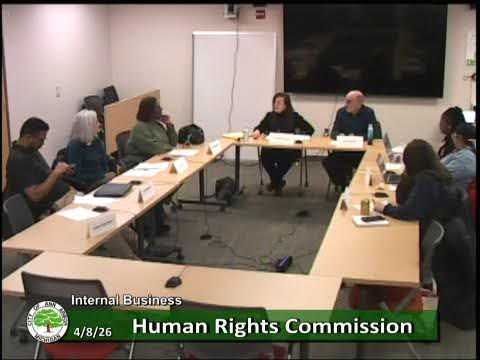
Andre Watson, president of Ann Arbor's NAACP chapter, briefed the Human Rights Commission on the branch's priorities and asked the commission to help amplify the chapter's legal-redress and outreach work.
Watson said legal redress is an area where the chapter needs additional capacity because people who believe they've been mistreated often call the NAACP for help. "Legal redress is an area we could really use support," Watson said, urging commission members to share complaint‑process information with community groups.
Watson outlined several ongoing programs and events. He said the chapter's Juneteenth celebration is scheduled for June 13 at Wheeler Park, the Black College Tour is a recurring youth program (past trips have run), and the annual Freedom Fund dinner will likely occur in October or November, with details to be announced. He said branch meetings are held the first Monday of each month at 7:00 p.m. and that annual membership begins at about $35, with lifetime options also available.
Commissioners and members asked for clarifying details about how the NAACP handles complaints and what kinds of cases the legal-redress team takes. Watson gave workplace-bias examples and said the branch can connect callers to legal and community resources so people do not have to handle problems alone. He also encouraged outreach partnerships with churches, campus groups and civic organizations to increase awareness of the city's non-discrimination complaint process.
The commission did not take formal action on Watson's requests at the meeting. Commissioners agreed to explore ways to share NAACP contact and complaint‑filing information with their networks, and members said they would follow up about possible joint events and informational sessions.