Get Full Government Meeting Transcripts, Videos, & Alerts Forever!
Get email alerts on the Public Safety Technology topic
No spam. Unsubscribe anytime.
Boston seeks $10.9 million federal grant to expand counter‑drone detection before major summer events
Summary
The Boston Police Department asked the City Council committee to approve a $10,925,140.07 federal Counter Unmanned Aircraft Systems grant to expand drone detection, tracking, identification and mitigation for large venues including the 2026 FIFA World Cup; councilors pressed BPD on privacy, surveillance‑ordinance compliance and sustainment costs.
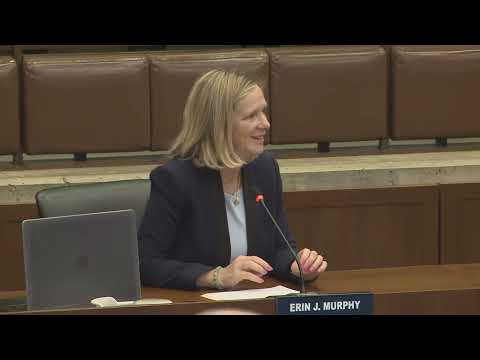
The Boston Police Department asked the City Council Committee on Public Safety and Criminal Justice on April 13 to accept a $10,925,140.07 federal Counter Unmanned Aircraft Systems (C‑UAS) grant intended to build a citywide, multi‑layered program for detecting, identifying, tracking and mitigating potentially unsafe drones at large events and critical infrastructure.
“ The total award amount for that is $10,925,140.07,” Superintendent Lanita Cullinane told the committee, laying out a budget that lists $289,982 for salary and fringe for a full‑time C‑UAS program manager, $300,000 for overtime, $10,035,158.07 for equipment and $300,000 for training. Cullinane said the project will fund radar, radio‑frequency detection, optical sensors and an airspace‑awareness command‑and‑control platform that supports both fixed and mobile deployments for stadiums and other high‑attendance events.
Councilors pressed BPD officials on what the grant would — and would not — buy. “It’s not about a BPD flying drones,” Deputy Martin said; the department clarified the funds will purchase detection and mitigation technologies and sustainment, not fleet drones. Officials said the grant will allow mobile sensor trailers and enhanced coverage in high‑activity areas rather than a full citywide system immediately.
The discussion also focused on how mitigation tools would be used and who would operate them. BPD described a mitigation “spectrum” that starts with identifying and educating pilots and can extend to electronic mitigation tools that, in coordination with federal partners when required, can override or direct a drone to land safely. BPD emphasized that some mitigation capabilities require federal coordination and legal compliance.
Councilors raised privacy and oversight concerns under Boston’s surveillance ordinance. Cullinane said the department will “comply with all local ordinances and state laws” and noted that the technology largely collects telemetry and remote‑ID data that identifies a device and helps locate a likely pilot. “We take the privacy concerns very seriously,” she said, adding that data collection plans and an implementation plan were part of the grant application.
Several councilors questioned sustainment: how long equipment will remain useful and whether the city will need operating‑budget support if federal funds lapse. BPD officials said vendors have indicated 3–5 years of sustainment is plausible and that procurement will seek built‑in maintenance and sustainment terms, but they acknowledged ongoing costs are possible.
Councilors also asked about procurement, training and interagency work. Cullinane said personnel to operate mitigation systems must complete an intensive training program (she said a three‑week program is required for some operators) and that the department routinely coordinates with the Coast Guard, state police and federal partners for major events.
The committee did not take a vote at the hearing. The grant was presented as Docket 0759 and is sponsored by the mayor; committee members said the administration will bring the award up for a floor vote to accept the funds. Next steps include a procurement process to select vendors and an implementation plan BPD said it will share with council staff.
Provenance: This article is based on testimony and Q&A presented to the Boston City Council Committee on Public Safety and Criminal Justice at the April 13, 2026 hearing (topic introduction at SEG 606; final related discussion at SEG 1766).
Ending: The committee heard detailed technical and privacy questions and signaled it will review the department’s implementation plan and procurement approach before a council floor vote on accepting the award.