Get Full Government Meeting Transcripts, Videos, & Alerts Forever!
Get email alerts on the Budget Human Services topic
No spam. Unsubscribe anytime.
Council hearing hears appeals to restore cuts to veterans, seniors and reentry grants
Summary
At a May 14 Boston City Council budget hearing, department leaders defended core services while councilors and dozens of public commenters urged restoring proposed cuts that would reduce Age Strong and veterans grants and end several reentry mini‑grant programs.
Chair Ben Weber opened the Committee on Ways and Means hearing on May 14, 2026, and outlined how residents can testify on the FY2027 budget. The Human Services Cabinet — Chief Jose Masso, Age Strong Commissioner Emily Shay, Veterans Commissioner Robert Santiago and Ashley Montgomery, executive director of the Mayor’s Office of Returning Citizens — presented program goals, metrics and the Mayor’s budget recommendations.
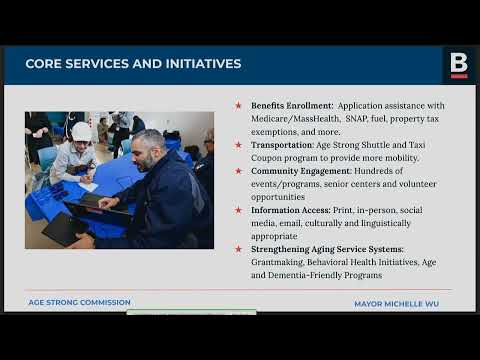
The administration’s proposal holds core services but would substantially cut community grants. Commissioner Emily Shay said Age Strong’s portfolio “protects our teams and the core services they deliver,” but listed specific grant reductions in the proposal and warned they would shrink partner‑run programs that provide social connection, behavioral‑health access and targeted services for older residents. Shay gave program totals and recent investments: the Age Strong network delivered thousands of hours of programming, supported 128 community youth programs through partnerships, and this year ran grants that the proposed budget would cut, including an expanding engagement line previously funded at $500,000 and behavioral‑health grants at about $450,000.
Veterans Commissioner Robert Santiago told the committee the office administers burial support, Chapter 115 financial assistance and outreach: “Every line in our budget represents a veteran,” he said. Councilor Ed Flynn pressed the panel during questioning, saying the administration had cut the veterans department “14% — just over $700,000,” and urged the council to restore the funds. Santiago and other panelists said the department will protect core benefit payments and crisis response, and noted some state‑reimbursable lines (the transcript references Chapter 115 reimbursements) are handled on a different accounting timeline; Santiago said a Chapter 115 reimbursement flows back to the City in the following fiscal quarter.
Ashley Montgomery said the Office of Returning Citizens serves 564 clients in case management and has placed about 98 clients in employment this fiscal cycle; she described the Bridge the Gap mini‑grant program and employer partnerships that helped outreach and placement. Councilors and Montgomery warned that cutting the mini‑grant portfolio and other community grant funds will reduce partners’ capacity to deliver linguistically and culturally specific services such as women‑focused reentry supports and immigrant‑language behavioral‑health counseling.
During the council question-and-answer period members repeatedly asked how the administration will fill gaps left by the proposed cuts. Councilors sought detail on which specific grants and contracts were at risk; commissioners replied that the largest shares of proposed reductions are grant lines and some contract services rather than staff layoffs, and that departments will work to preserve core benefit and direct services while seeking external philanthropic or state funds to backfill community programming.
Public testimony was extensive. Dozens of veterans, caregivers and nonprofit leaders described the programs that would be affected and urged restoring funding. Dan Magoon of Fallen Heroes implored the council: “Do not balance the budget on the backs of our veterans,” and multiple speakers from senior organizations and the Greater Boston Chinese Golden Age Center urged preservation of dementia‑care groups, memory cafés and bilingual behavioral‑health supports. Reentry providers (We Are Better Together and others) described the Bridge the Gap mini‑grants as critical for housing navigation, job training and family reunification programs.
The committee did not take a vote at the hearing. Councilors repeatedly framed the cuts as choices the council will revisit during the amendment process and said they would seek options to restore funding. Department leaders asked the council for clarity on amendment priorities; several expressed willingness to meet with council members to identify which grant lines to reinstate if amendment funds become available. Chair Weber adjourned the hearing and noted the council’s amendment opportunities ahead of final budget adoption.
What’s next: the Council’s budget amendment cycle and a scheduled May 26 listening session offer opportunities for councilors to propose restorations. Department leaders said they will continue to prioritize direct services and seek alternate funding to reduce the impact on community partners.