Get Full Government Meeting Transcripts, Videos, & Alerts Forever!
Get email alerts on the Human Services Modernization topic
No spam. Unsubscribe anytime.
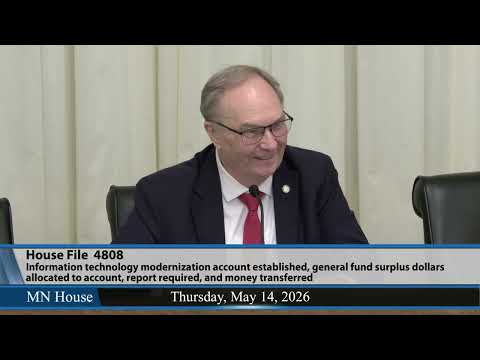
House committee advances plan to create $50 million Human Services Modernization Fund
Summary
A House committee voted to refer House File 4808, which would create a Human Services Modernization Fund with a $50 million cap, establish an advisory council and a legislative oversight commission, and provide a one-time allocation for OIG technology; testimony from county associations and multiple members expressed broad support.
A House committee advanced House File 4808 on a voice vote after testimony and discussion about modernizing state human‑services technology and governance.
The bill would establish a Human Services Modernization Fund capped at $50 million and use a replenishment mechanism similar to one used for disaster‑relief funds, the bill’s sponsor said. The sponsor said the bill is intended to reduce siloes and enable agencies and oversight entities to integrate information, saying legacy systems routinely force county workers to “waste a lot of time” and make it difficult for caseworkers to spend time with clients.
The measure sets up an advisory council that the sponsor described as including Human Services, Children, Youth and Families and information-technology representation, with additional appointments by county associations and one representative from tribal nations to provide ongoing input. The sponsor also described a $10 million county‑focused grant program for county projects and said appropriations must be used only for eligible multi‑year modernization activities.
Section 13 of the bill would allocate funding for the Office of the Inspector General’s technology needs; the sponsor described an allocation in the $5 million to $15 million range so the OIG can “hit the ground running.”
Matt, a representative of the Association of Minnesota Counties who testified in support, said the bill “has high short‑term impact and that is critically needed,” called the legislation bipartisan and praised the tribal and county involvement written into the plan. He thanked the bill’s lead author and staff for their work and urged prompt action.
Several committee members voiced support, calling the bill collaborative and noting that better systems could reduce error rates that trigger federal penalties for programs such as SNAP. One member urged that, given the size of the investment, the legislature consider building in audits in addition to required reports to ensure accountability.
The committee adopted a D3 amendment by voice vote and then approved a motion to refer House File 4808, as amended, to be recommended for placement on the General Register.
Next steps: the bill was referred to the General Register for further consideration.