Get Full Government Meeting Transcripts, Videos, & Alerts Forever!
Get email alerts on the School Funding topic
No spam. Unsubscribe anytime.
Assembly weighs FY27 school funding as residents urge saving auditorium staff
Summary
The Kodiak Island Borough Assembly heard extended public testimony urging full school funding to preserve the Gerald C. Wilson Auditorium director/technician position; the school district defended its FY27 ask as driven by staffing and inflation and clarified the budget does not include an iPad refresh.
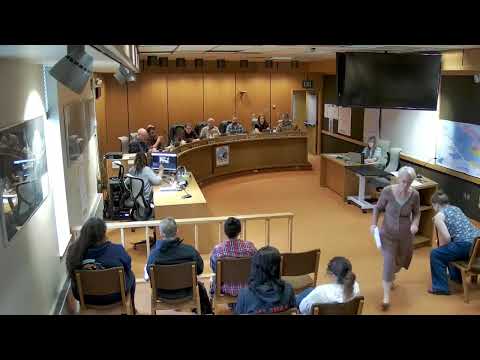
The Kodiak Island Borough Assembly spent much of its May 14 work session debating how much local support to provide the Kodiak Island Borough School District for FY2027 while residents urged the assembly to preserve staffing at the Gerald C. Wilson Auditorium.
Dozens of residents and community organizations told the assembly that the borough-owned Gerald C. Wilson Auditorium is a core community asset and that cutting the auditorium's technician/director would threaten safety, volunteer coordination and the venue's ability to serve 700-seat events. "The auditorium generates economic activity," Molly Miller, executive director of the Kodiak Arts Council, said, noting the building hosts performances that draw patrons to local businesses. Several speakers warned that institutional knowledge and technical capacity are hard to restore once lost.
The appeal followed a district presentation of its FY27 request. Dr. Cindy Mika, superintendent of the Kodiak Island Borough School District, said the district is asking for an approximately $1.6 million increase in local funding primarily because of inflation and rising staffing costs, and she disputed public assertions that the budget contains a million-dollar iPad purchase. "That is not correct," Mika said. "There is no money for iPads in this budget."
Why it matters: the assembly must balance a legally required local contribution, rising costs for borough maintenance and capital projects, and taxpayer concerns about the mill rate. The manager's budget was built assuming the district would request the maximum local contribution; staff also identified an extra ~$302,000 in severance-tax revenue that could be applied to FY27 and noted up to $1.45 million in allowable facilities-fund interest earnings the assembly could use as a one-time bridge.
Assemblymembers debated trade-offs. One member proposed spreading the burden and supporting an $800,000 increase rather than funding the full district cap; others warned that using interest or fund balance to bridge the year risks future capital shortfalls. Several members asked staff to open conversations with the school board about whether the borough could assume responsibility for the auditorium position to spread costs across entities.
The district presented student-assessment data showing cohort growth in early grades: Mika said kindergarten cohorts entered the year with 62% of students below benchmarks and reduced that to 24% by year'end in district assessments. Still, some callers and an assembly member raised concerns about early-grade screen time and classroom iPad usage, citing individual examples; Mika and district staff said iPad use is limited and mainly used for interventions and legally required diagnostic programs.
What was decided: the assembly did not take a final vote on school funding at the work session. Staff will introduce the FY27 ordinance for introduction next week with updated revenue and interest estimates; the assembly expects to consider amendments and vote on the local contribution at the upcoming regular meeting. Members were asked to submit amendment language in advance so staff can prepare fiscal impacts.
The next step: the assembly scheduled formal consideration of the school funding resolution and the FY27 ordinance for the next meeting; members who want to propose funding amendments were asked to email proposed language to staff ahead of the vote.