Get Full Government Meeting Transcripts, Videos, & Alerts Forever!
Get email alerts on the Wastewater Infrastructure topic
No spam. Unsubscribe anytime.
Madison Metropolitan Sewer District details $50M treatment upgrade and $200M biosolids and energy project; warns of lower chloride limits
Summary
Eric Dundee, executive director of the Madison Metropolitan Sewer District, told the Cottage Grove Utility Commission that MMSD serves about 440,000 people and plans a roughly $50 million biological treatment upgrade and a combined ~$200 million biosolids and heat‑and‑power project. He urged local action on road salt, older water softeners and flushable wipes to meet a new WPDES/DNR chloride limit.
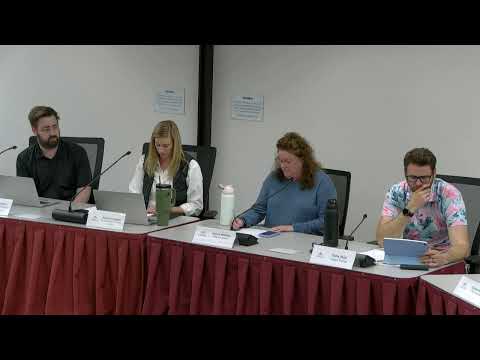
Eric Dundee, executive director of the Madison Metropolitan Sewer District, told the Cottage Grove Utility Commission on May 13 that MMSD serves about 440,000 people and is planning major capital and resource‑recovery projects to meet future demand and permit limits. "We serve about 440,000 people," Dundee said, and projections for Dane County could push that to about 550,000 in 20 years.
Dundee outlined two near‑term capital priorities. He said MMSD will bid a roughly $50,000,000 upgrade to biological treatment systems in June to improve nutrient removal and reduce energy use. "This is a $50,000,000 project that we get to spread out over communities," he told commissioners. He added that the plant spends about $4,000,000 a year on energy and that efficiency is a central design goal.
Separately, Dundee described a heat‑and‑power initiative to capture biogas and inject it into the regional gas pipeline, plus a related biosolids project. "This project plus our biosolids project is about a $200,000,000 project," he said, framing the work as both an environmental and potential revenue opportunity because the district now flares gas it cannot use on‑site.
Dundee also flagged a recent WPDES (DNR) permit with a lower chloride limit. He said the district receives "over 200,000 pounds of salt" a day in wastewater and that about 100,000 pounds of that is from household water softeners. "When we get a new chloride limit and get told you have to reduce the amount of salt concentration in your effluent," he said, "we want to look at community actions" such as rebates for water softener replacements and changes in road‑salt practices.
On infiltration and inflow, Dundee said much of the wet‑weather surge comes from home connections and aging infrastructure. He estimated that roughly 75% of infiltration and inflow originates between the house and the manhole, citing tree roots, roof drains tied to sanitary lines and sump pumps as typical contributors. He urged outreach and provided materials MMSD has prepared for local mailers and websites.
Dundee also warned about so‑called flushable wipes, calling them effectively trash: "Whether that's put onto some packaging that says flushable wipes or not, it's not flushable," he said, and described how fibrous wipes tear, grab other material and cause pump clogs. He recounted an incident in which a pump would have sustained substantial damage had a large object not lodged in the suction (he estimated pump damage could be $200,000–$300,000 in a comparable case) and offered to follow up to provide cost estimates for debris removal.
Commission members asked for more quantitative follow‑up. One member asked for cost figures on annual cleaning and clog repair; Dundee said MMSD would provide national and local numbers. Another asked whether newer systems see the same I/I problems; Dundee said older homes and lateral cleanouts are common sources and described a pilot of a "blending valve" on water softeners in Middleton as a less‑disruptive mitigation measure. He also praised a local business, Hydrite Chemical, for retrofitting systems and cutting salt use."If you are really investing a lot of money in salt," he said, "you're buying salt every couple months; that's where the significant amount of salt is coming from."
The commission approved routine business — minutes from March 11 and a special April 16 meeting, and vouchers as presented — before hearing the presentation and a director/engineer report on local projects and GIS licensing issues. Staff said they will follow up with the commission on requested cost data, pilot outcomes and outreach materials.
The commission closed the meeting without further action and adjourned.