Get Full Government Meeting Transcripts, Videos, & Alerts Forever!
Get email alerts on the Permit Iws topic
No spam. Unsubscribe anytime.
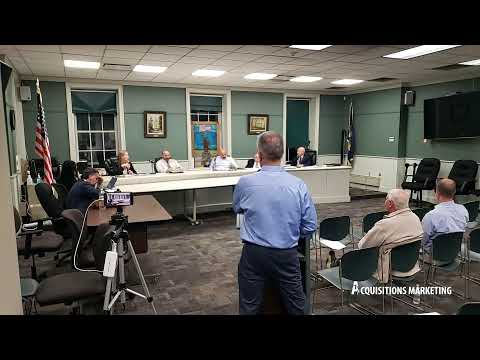
Goshen board debates IWS transfer-station permit, members press for host fee, DEC alignment
Summary
The board debated a proposed chapter 80-b ADB permit for IWS to handle up to 670 tons per day of waste and C&D debris; council members pressed for a signed host-community agreement, traffic mitigation commitments and alignment with state DEC permits before final sign-off.
The town attorney presented a written resolution and permit instrument that would authorize construction and operation of the IWS facility under chapter 80-b, mirroring the board’s previously adopted SEQRA findings and the final environmental impact statement. The permit language authorizes up to 670 tons per day of municipal solid waste and construction and demolition (C&D) debris and incorporates construction and operational conditions, traffic mitigation contributions from the applicant, monitoring and reporting requirements, and compliance with applicable Department of Environmental Conservation permits.
Councilman Cantarino took a firm position opposing the board authorizing the higher 670‑ton throughput without additional protections. "I will be voting no on this process," he said on the record, arguing the applicant could have proposed a limit of 600 tons plus 70 tons of recyclables rather than requesting 670 tons of mixed waste and C&D, and that the town should protect local roads and neighborhoods from increased truck traffic.
Other board members and counsel discussed options to tie the town’s authorization to the applicant’s DEC permit and to make approval contingent on a signed host‑community agreement. The town attorney said the local permit does not override state restrictions: "They are still restricted by whatever their DEC permit allows," and noted a local authorization can coexist with a more restrictive state permit.
After extended debate the board adopted a memorializing resolution to authorize the supervisor to sign the permit, subject to modifications discussed on the record and with an updated resolution to be circulated to the board before signature. The board also agreed that the host community agreement (including an escalator clause) and final language edits would be finalized prior to execution. The town attorney committed to circulate a revised resolution reflecting the record edits for distribution to members before implementation.
No immediate operational changes took effect beyond the board’s authorization step; the applicant remains subject to DEC permitting and any more restrictive state terms.