Get Full Government Meeting Transcripts, Videos, & Alerts Forever!
Get email alerts on the Nrc Budget topic
No spam. Unsubscribe anytime.
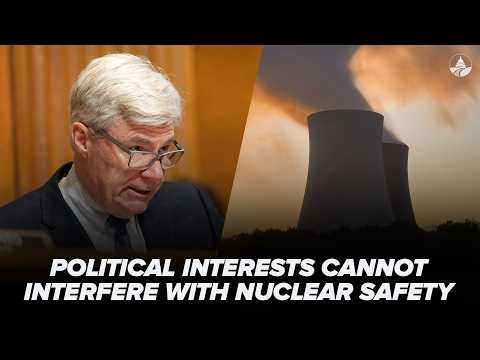
Senate EPW presses NRC on FY2027 cuts as agency touts licensing savings
Summary
At an EPW hearing, Nuclear Regulatory Commission leaders defended a proposed FY2027 budget that reduces staff and projects millions in licensing and oversight savings tied to the Advance Act; senators warned the cuts could strain oversight and agency capacity.
The Senate Environment and Public Works Committee on May 20 heard Nuclear Regulatory Commission leaders defend a proposed fiscal year 2027 budget that is nearly $80 million below FY2026 enacted levels, saying changes driven by the Advance Act produce concrete savings while preserving safety.
Chair (Capito) opened the hearing by asking the NRC to quantify cost reductions tied to the Advance Act. Chairman Ho Ni told senators the agency had cut licensing costs by “approximately $6,000,000 and 30 full time equivalents” and reduced oversight costs by “around $9,000,000 and 40 full time equivalents,” and described additional corporate-support savings. Ni said those reductions stem from focusing staff on safety-significant work and streamlining administrative tasks.
Ranking Member Whitehouse and several senators pressed that the proposed budget concurrently trims inspector oversight and staff at a time when the NRC is producing more rulemakings and reviewing more license applications. Whitehouse said the inspector general’s budget was cut “by nearly a quarter,” raising questions about whether internal oversight will be sufficient to detect problems.
Commissioner Bradley Crowell acknowledged the agency had lost “510 employees” in the past 16 months while adding roughly 59 new staff, and warned that the efficiency gains relied in part on acting in a largely single-application environment. He said efficiencies could be vulnerable when the agency must review multiple applications simultaneously.
Committee members pressed for clarity on how the NRC’s staffing plan aligns with rising workloads. Chairman Ni and other commissioners said the agency is hiring—Ni cited roughly 80 external job postings and Weaver noted about 30 interns coming this summer—and stressed that pre-application engagement and risk-informed, performance-based reviews let the NRC focus resources where they matter most for safety.
The exchange concluded without a vote. Senators asked for further follow-up materials and for NRC responses to written questions by the committee’s deadline. The hearing record will include additional documentation requested for the committee’s review.