Get Full Government Meeting Transcripts, Videos, & Alerts Forever!
Get email alerts on the Developer Impact Fees topic
No spam. Unsubscribe anytime.
Lynwood Unified board closes hearing and approves higher developer impact fees
Summary
After a public hearing on May 14, the Lynwood Unified School District board approved state-proposed increases to developer impact fees, voting 3-0 to adopt the item. Board discussion stressed transparency and noted residential rates are higher because new housing brings more students.
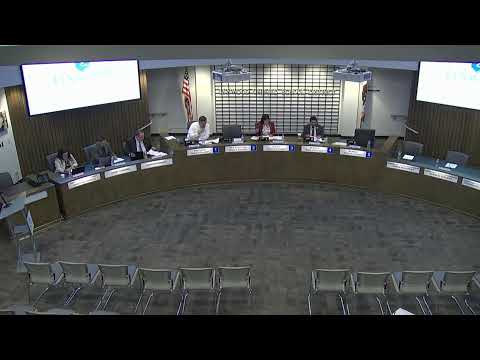
The Lynwood Unified School District Board of Education closed a public hearing and approved an item to adopt state-proposed increases to developer impact fees on May 14, 2026, voting unanimously. The hearing addressed proposed fee changes under Education Code 17620 and drew public and board discussion about fee waivers and how the fees are calculated.
At the hearing a resident urged the board to include explicit language preventing preferential fee waivers. “No one should come and ask for fee waivers,” the speaker said, asking that the record reflect a prohibition on special favors for developers.
Board member Dr. Castro, who moved to approve the agenda item, described the proposal as a state-proposed rate increase and said the district is pursuing the change to remain consistent with state law. He explained the higher residential fee is intended to reflect that new homes, more than commercial development, tend to increase student enrollment and therefore place larger demands on district facilities. “Residential fees are gonna impact students more because we’ll get more students with residential construction,” Dr. Castro said.
During discussion Dr. Castro cited the proposed rates: about $5.38 per square foot for residential development and roughly $0.87 per square foot for commercial projects. Assistant Superintendent Mister Saragosa added that fee revenue may only be used for facilities improvements and emphasized the district’s intent to be transparent in applying the law.
After closing public comment and additional clarifying remarks from board members and staff, the board voted to approve the item. The motion to approve was made by Dr. Castro and seconded by Board member Del Real Calleros; the motion carried 3-0.
Board members said the increase will not fully fund all facility needs and indicated staff follow-up will continue to provide more detail on the calculations and application of fees. The hearing record and the board’s action remain part of the public record; the board did not attach additional directives to suspend fee waivers beyond the discussion recorded during the hearing.