Get Full Government Meeting Transcripts, Videos, & Alerts Forever!
Get email alerts on the Housing topic
No spam. Unsubscribe anytime.
Reclaim director warns North Bend leaders of growing housing instability, displacement risks
Summary
Jen Kirk, executive director of Reclaim, told the North Bend City Council that local housing loss and rising rents are pushing people into homelessness; she cited motel-based sheltering that serves 35–50 people nightly, 320 community-service users in a recent three-month period and 52 people placed into permanent housing in Q1 2026.
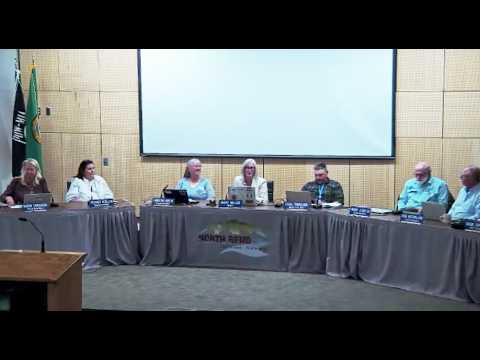
Jen Kirk, executive director and cofounder of Reclaim (formerly Snoqualmie Valley Shelter Services), told the North Bend City Council on May 5 that the valley is losing affordable housing and that the city should take steps to preserve existing units and invest in prevention and supportive services.
Kirk told council members that Reclaim’s front-door community service center in downtown Snoqualmie served 320 individuals in a recent three-month period and that the organization’s motel-based “shelter to home” program houses 35–50 people each night. "We are a lifesaving agency before we do anything else," Kirk said, and added that in the first quarter of 2026 Reclaim moved 52 people into permanent housing.
The presentation flagged specific local properties and the likely effect of sales on low-income households: Kirk said the Mount Si Motel, a 17-unit property long used for transitional housing, is listed for $4,500,000, and that Regency Apartments (11 units) has gone on the market. "The sale of this property will likely bump rents beyond any level of affordability for the lower income people that are currently living there," Kirk said, describing tenant calls to Reclaim from those fearing displacement.
Kirk described Reclaim’s shift from congregate sheltering to motel-based shelter and a shorter standard program length (a 60-day base with extensions when clients are actively engaged in case management). She said the organization partners with Hopelink and Plymouth Housing to place clients in permanent supportive housing when possible, but that many placements require leaving the valley because limited housing stock pushes clients outside the area.
Councilmembers asked for more detail on placement outcomes and housing types. Councilmember Christina Rustic noted the 52 people placed into permanent housing and asked where they were placed; Kirk said many were placed outside the valley and cited partnerships with out-of-valley assisted-living and supportive-housing projects. Kirk called for local policies to preserve low-income units, require meaningful tenant relocation assistance when properties redevelop, extend notice windows for sales, and consider rent-stabilization or "right to return" policies where feasible.
Kirk also described smaller program supports Reclaim provides at its facility — case management, help applying for benefits, laundry and gas cards, emergency food and baby supplies, and a "Threads of Kindness" clothing boutique — and said the Resilience Rising program (funded through a Department of Justice Violence Against Women grant and provided in partnership with the Snoqualmie Tribe) prioritizes survivors of gender-based violence.
The council did not take formal action on policy changes during the meeting; the presentation closed with elected officials thanking Kirk and acknowledging the continuing need for creative housing solutions and interjurisdictional coordination.
The presentation was followed by questions from council members and brief discussion about regional constraints and potential city responses.