Get Full Government Meeting Transcripts, Videos, & Alerts Forever!
Get email alerts on the Festival Contract topic
No spam. Unsubscribe anytime.
County approves amended festival law‑enforcement agreement after debate over who covers overtime costs
Summary
After hours of public comment and supervisor debate, the Chippewa County Board approved an amended law‑enforcement services agreement for county music festivals, voting 18–2 after an amendment shifted reimbursement language to follow collective‑bargaining rates rather than a time‑and‑a‑half reimbursement cap.
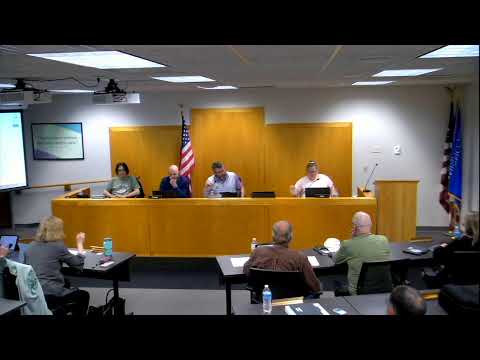
The Chippewa County Board of Supervisors voted 18–2 to approve an amended law‑enforcement services agreement for the county’s music festivals after a lengthy public comment period and debate over who should cover the difference between union double‑time pay and festival reimbursed rates.
Supporters of the festival told the board the events provide major economic and community benefits. Darren Sen, who identified himself as president of the Chippewa Valley Music Festival board, told supervisors the festivals “provide more than just a giant economic impact to the area” and urged them to back the executive committee’s recommendation. Festival representative Wade Asher warned the board that the proposal to limit festival reimbursement would shift substantial costs to festival operators, saying “this alone … represents a minimum of $50,000 in additional cost to us.”
The contract changes presented by county staff included several administrative clarifications — adding an administrative appeal process for disputed invoices, clarifying invoice timelines, and incorporating amendments to the county’s large‑assembly ordinance that allow law‑enforcement staffing levels to be adjusted during an event. The most contested provision concerned how the county should be reimbursed when unionized deputies work overtime: the union contract requires double time for non‑governmental contract hours, while the executive committee had recommended festival reimbursements at time‑and‑a‑half.
County staff outlined options for absorbing any shortfall if the board adopted the time‑and‑a‑half reimbursement approach: direct the sheriff to absorb the cost within his budget, cover the difference from the general fund, or allow the sheriff’s budget to run a deficit and address it later. Administrator Andy Alvarado said the estimated impact for the three festivals under discussion was roughly $35,000–$50,000, though he said the exact figure would depend on which employees work overtime.
Sheriff Hicks, who answered supervisors’ questions about staffing, said a majority of deputies are subject to the union contract and that many festival hours would therefore be overtime. He described some creative scheduling and mutual‑aid options the department is exploring to reduce costs.
Supervisors expressed competing priorities: several members pressed the board to avoid placing recurring costs on general taxpayers or setting a precedent that would extend to other nonprofits and volunteer groups, while others stressed the festivals’ economic return and local business dependency. Supervisor Kelly moved to remove the proposed time‑and‑a‑half reimbursement language and default reimbursement to the county’s collective bargaining rates; that amendment passed 14–6. The board then voted to approve the agreement as amended, 18–2.
The chair noted passage of the agreement made the previously scheduled midyear budget adjustment unnecessary. Under the adopted language the county will seek to recover law‑enforcement costs from festivals at the county’s full cost consistent with collective‑bargaining rates and the contract’s other administrative clarifications. Staff and the sheriff indicated the county will continue to monitor actual overtime costs and bring any necessary budget recommendations forward if a shortfall emerges.