Get email alerts on the Student Behavior topic
No spam. Unsubscribe anytime.
District outlines PBIS behavior documentation and MTSS supports
Summary
The district presented clarifications to its PBIS framework, defining teachable moments, minor and major behaviors, and emphasizing consistent documentation, MTSS team review and staff safety-care training to support students and staff across school levels.
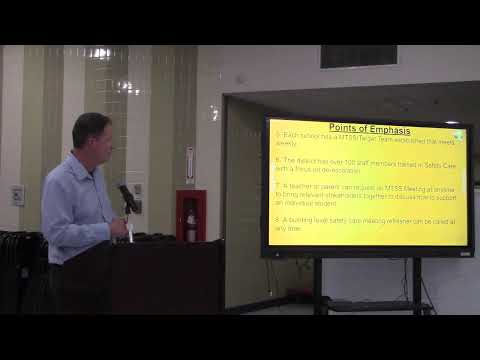
Jim Fields presented the Cumberland School Committee with a district overview of Positive Behavioral Interventions and Supports (PBIS) on May 14, explaining how the district defines and documents teachable moments, minor behaviors and major behaviors and how data will be used to inform interventions.
Fields said PBIS has been in place in the district for about 18 years and is aligned with the district’s MTSS (Multi-Tiered System of Supports). He described minor behaviors as low-level disruptions that can be handled by the observing adult and major behaviors as unsafe or highly disruptive actions that require removal from the classroom and additional adult support. Major behaviors include physical aggression, elopement, directed abusive language, and sustained noncompliance.
Fields emphasized the district’s effort to standardize documentation across buildings so teachers and staff can track incidents consistently and MTSS teams can meet weekly to review patterns and plan interventions. He noted the state allows up to two credits for certain work-based learning experiences (mentioned elsewhere in the meeting) and encouraged staff to request MTSS meetings when needed; he also said about 100 staff have received safety-care de-escalation training this year.
Next steps include additional PBIS overviews for new hires, school-level meetings to clarify examples by grade level, and continued training to strengthen consistent practices for documenting and responding to behavior.
Why it matters: Clear, consistent definitions and documentation influence how students receive supports, how incidents are triaged, and whether interventions are timely and appropriate.
AI generated
The text on this page is AI generated. Summaries, highlights, analysis, and video transcripts are all produced from the original source material.
AI can make mistakes, so if you spot one, and we will fix it for everyone.
Note: the source content is unaltered by us. Any content source we link to, be it a video, an audio recording, or a document, is presented exactly as its publisher released it. That publisher is usually a government body, sometimes an individual official or another organisation.