Get Full Government Meeting Transcripts, Videos, & Alerts Forever!
Get email alerts on the State Budget Legislative Update topic
No spam. Unsubscribe anytime.
NVTA personnel committee hears legislative update as state budget deadline nears
Summary
A staff briefing to the Northern Virginia Transportation Authority personnel committee outlined outstanding General Assembly actions — including a possible change to the sales-and-use tax exemption for data centers — that could alter state revenue available to localities and transit before the governor’s May 23 deadline and the June 30 biennium cutoff.
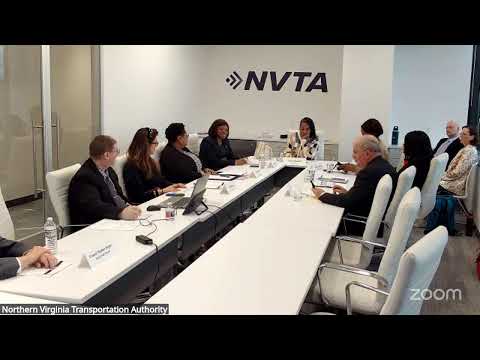
The Northern Virginia Transportation Authority’s personnel committee on May 14 approved its March meeting minutes and received a staff briefing on the General Assembly’s pending actions and how they might affect regional funding.
A staff member for the Authority told the committee that returned bills are under gubernatorial review and that “they have until 11:59 p.m. on May 23 to sign or veto” those measures. The staff member said that some bills may take effect without the governor’s signature and that the legislature’s conference process will follow to resolve budget differences.
Why it matters: Committee members pressed staff on how the uncertain state budget could affect local revenue-sharing and transit funding. The staff member said that, while there is confidence a biennium budget will be adopted by July 1, 2026, officials do not yet have final clarity about which bills will change the state’s fiscal picture and therefore which state funds might be available to replace local revenue.
Key budget issues discussed included House Bill 30 as the baseline for current conferees, the potential expiration or modification of a sales-and-use tax exemption for data centers, and alternative mechanisms to generate “net new revenue” from the data-center industry. The staff member described discussions between legislative chairs and administration leaders about options such as a consumption tax or an energy consumption fee and said these alternatives are being weighed as possible compromises.
On timing and thresholds, the staff member said, “June 30 is the last day of the current biennium. July 1 is the first day of the event,” stressing that certain tax questions tied to the biennium’s end would need resolution by that date. Committee members emphasized the operational need for certainty, particularly for school boards and local governments that must adopt budgets and track revenue-sharing agreements.
The committee also discussed transit funding implications. A member asked whether alternative tax approaches would affect Metro funding assumptions; staff responded that if a final approach avoids changing the sales-and-use tax base, the transit funding assumptions the committee uses would likely be preserved. Staff noted the Senate and House had different priorities in their proposals — the Senate emphasizing capital support for Metro and the House emphasizing general fund revenue for rebenchmarking gaps — but said operating funds are often more immediately important for local governments.
Action at the meeting: The committee approved the March 12, 2026 meeting minutes. The Chair moved to approve the minutes; a second was recorded as by Chair Jefferson of Prince William County, and the motion passed unanimously for members present.
Next steps: Staff told the committee they will monitor gubernatorial action through the May 23 deadline and the conference process afterward and report any changes that would affect NVTA assumptions; members said they expect to revisit assumptions once the state’s actions are final.