Get Full Government Meeting Transcripts, Videos, & Alerts Forever!
Get email alerts on the Child Custody Jury Versus Judge topic
No spam. Unsubscribe anytime.
Supreme Court hears dispute over whether jury's "primary residence" designation limits judge's custody orders
Summary
At oral argument in Gopalan v. Marsh, counsel disputed whether a jury's finding that a parent is the child's "primary residence" imposes a minimum possession threshold and limits a trial judge's authority over possession, education and other rights; the court also heard challenges to a JNOV on separate property and a $250,000 international travel bond.
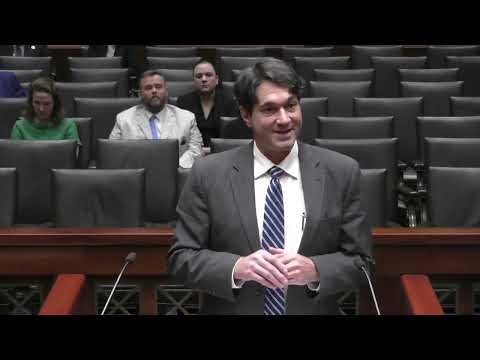
The Supreme Court of Texas on the bench Monday weighed whether a jury's determination that a parent is the child's —primary residence— constrains a trial judge's power to set possession schedules and allocate parental decision-making. Petitioner counsel Steven Orsinger told the court the Texas Constitution and the Family Code protect the force of a jury's verdict and that a jury's designation should set a —lower threshold— for possession time, which he argued should be at least a majority of overnights.
Orsinger said the trial judge's post-verdict possession order in this case —contravened and undermined— the jury's finding by awarding the father materially less time and by granting the mother exclusive authority over educational and mental-health decisions. "The right of trial by jury shall remain inviol," he told the court, and he relied on section 105.2 of the Family Code in arguing that a judge may not contravene an issue submitted to the jury.
The argument turned on statutory interpretation and precedent. Multiple justices pressed counsel on whether the Family Code defines "primary" or supplies a quantitative minimum, and whether prior appellate opinions effectively treated a primary designation as entitling a parent to at least half of the time. Orsinger invoked a common-law and plain-meaning approach and cited intermediate appellate decisions that, he said, typically read a primary designation to require roughly majority possession.
Respondent counsel Miss Blair disputed that conclusion, saying the Family Code (including section 153.134B) entrusts trial courts with discretion over possession, child support and decision-making in joint-managing-conservatorship cases. Blair told the justices the petitioner filed a pleading before trial narrowing the geographic residence issue to Travis County, and she urged the court to read the jury instructions and statutory context broadly: a jury's grant of the right to designate a residence, she said, does not necessarily guarantee a minimum possession allotment.
Blair also urged the court to respect the trial court's factual findings, noting that the record includes evidence the petitioner said he might change the children's schools and that the standard possession order is rebuttable. On the separate-property challenge, she argued the appellate standard requires the court to assume facts that support the trial court's judgment when reviewing sufficiency.
Petitioner rebuttal emphasized precedent and practical effects. Rebuttal counsel (identified in the record as Mr. Horsinger) recalled a Supreme Court precedent the side reads as limiting trial-court contravention of jury verdicts, and presented a possession calculation he said showed the children spent roughly 43% of overnights with the father and 57% with the mother. Orsinger/Horsinger also reiterated that a JNOV overturning a jury's finding of separate property raises constitutional concerns if the record supports the jury's verdict.
The court did not announce a decision at argument and took the case under submission after questioning and rebuttal. The justices repeatedly returned to the statutory text and to whether the Family Code's structure permits a judicial minimum possession tied to a jury's primary-residence finding, or whether the statute leaves those allocation questions to the trial court's discretion.
What happens next: the court will issue an opinion resolving whether (and to what extent) a jury's primary-residence determination limits a trial court's ability to craft possession schedules and allocate decision-making rights, and whether the trial court erred in granting JNOV or ordering a $250,000 international-travel bond. The oral argument is on the court's public record and the court announced a brief recess before proceeding to the next matters.