Get Full Government Meeting Transcripts, Videos, & Alerts Forever!
Get email alerts on the Student Safety topic
No spam. Unsubscribe anytime.
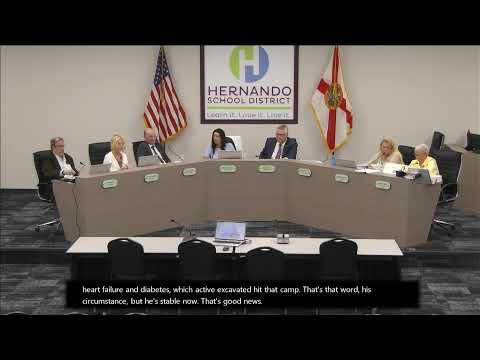
Assistant state attorney offers traffic-stop safety presentations to Hernando County students
Summary
At a board workshop, Assistant State Attorney Robert Lewis outlined a volunteer program to teach high school students how to interact safely with police during traffic stops; the board expressed support, asked staff to coordinate scheduling with driver education, and debated parental consent procedures.
Robert Lewis, an assistant state attorney who prosecutes traffic homicides, told the Hernando County School Board at a workshop that he would volunteer to deliver a classroom program teaching high school students how to act during traffic stops to reduce risk for students and officers.
"I can present a pretty even‑handed safety presentation," Lewis said, describing a program that uses short video excerpts and role‑play to show both the driver’s and officer’s perspectives. He said the goal is safety, not legal strategy — to teach students where to keep their hands, how to hand over documents, and how to decline a search politely while keeping the interaction calm.
The presentation included a high‑profile Jacksonville traffic‑stop video and referenced national cases that illustrate how routine stops can escalate. Lewis stressed pragmatic points — visibility of hands, minimizing sudden movements, keeping license and registration accessible — and warned against using social‑media-driven tactics that aim to provoke arrests for views.
Board members asked about cost and logistics. Lewis said the circuit court would not charge the district and that he was "volunteering my time." He estimated sessions could run 30–60 minutes, with about 45 minutes ideal for a 20–30 student group to allow for two volunteer students to role‑play a stop.
Members discussed how the program should be presented to families. Some trustees proposed an opt‑out consent distributed via district tools such as ParentSquare or Skyward; at least one board member urged an opt‑in approach. Staff said they would work with the superintendent and driver‑education teachers to identify appropriate class times and consent language.
The board did not record a formal vote but gave direction to the superintendent’s office to coordinate scheduling and to develop parent notification/consent procedures. Lewis said he hopes to reach students across Hernando County over the next 12 months if scheduling permits.
Next steps: district staff will coordinate dates with high school driver‑education teachers, prepare a consent process for families, and return to the board with a recommended implementation plan.