Get Full Government Meeting Transcripts, Videos, & Alerts Forever!
Get email alerts on the Video Gaming topic
No spam. Unsubscribe anytime.
St. Charles council debates loosening one‑year rule on video gaming licenses, stops short of change
Summary
Council held an extended discussion on whether to amend local video‑gaming rules that require an on‑premise liquor license to be held for one year before applying for gaming; members split between flexibility for established restaurateurs and concerns about enabling gaming cafes. No ordinance change was adopted; staff will research and return with options.
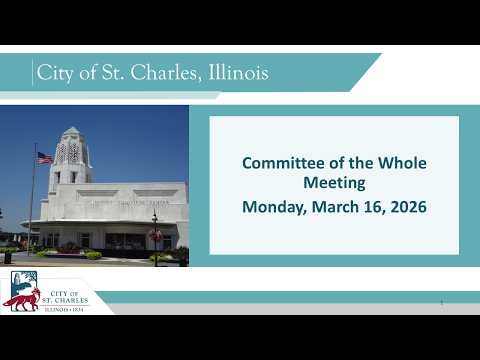
The St. Charles Committee of the Whole devoted a lengthy portion of its March 16 meeting to a policy review of Chapter 5.09 (video gaming) and related liquor code provisions.
Staff explained the local code currently prohibits gaming cafes and requires an on‑premise liquor license to be held for at least one year before applying for video gaming. Council discussion focused on whether the one‑year standard should be amended to provide flexibility for established operators (some council members noted a 6–9 month state approval timeline that can delay openings) while preserving protections against gaming‑only cafes downtown.
Arguments in favor of change: Several council members and business representatives said the one‑year waiting period disadvantages applicants who are experienced restauranteurs or multi‑location operators committing long leases and private investment. One business owner told council that package liquor stores were particularly squeezed by competition and sought parity if safeguards were applied.
Arguments against change: Other council members urged the city to rely on objective policy guardrails rather than subjective judgments of who is a "successful" operator, and they stressed that the one‑year rule was originally intended to prevent gaming cafés. Concerns included downtown character, public safety and zoning consistency.
Result: Council asked staff to organize more research and bring the topic to a future strategic meeting or workshop for broader discussion, rather than making an immediate ordinance change. Staff described options including targeted zoning and more precise ordinance language to preserve the city's intent while addressing business concerns.
Next steps: Staff will prepare scenario options and legal drafting alternatives and report back in a workshop setting so council can consider targeted zoning, guardrails for retail vs on‑premise operations, and potential approaches to balance business recruitment with downtown protection.