Get Full Government Meeting Transcripts, Videos, & Alerts Forever!
Get email alerts on the Public Safety Technology topic
No spam. Unsubscribe anytime.
Spokane council hears staff on DHS-funded drones, ‘dropper’ attachment and tight July 1 deployment deadline
Summary
City staff told the Spokane City Council at an April 20 agenda review that a Department of Homeland Security grant requires equipment to be deployed by July 1 for reimbursement, prompting questions about procurement timelines, a drone "dropper" payload and barrier orders tied to event security.
City staff briefed the Spokane City Council at an April 20 agenda review that a Department of Homeland Security grant would reimburse purchases of drones and crowd-control barriers only if the equipment is deployed by July 1, raising questions among council members about ordering timelines and certain drone capabilities.
"The grant is contingent that all those things have to be deployed by July 1st," Mr. Scott said, explaining that the city has not yet received DHS funds and must complete contracting and procurement promptly to be eligible for reimbursement. He told council members that delivery and production schedules are constrained and that earlier orders reduce the risk of missing the reimbursement window.
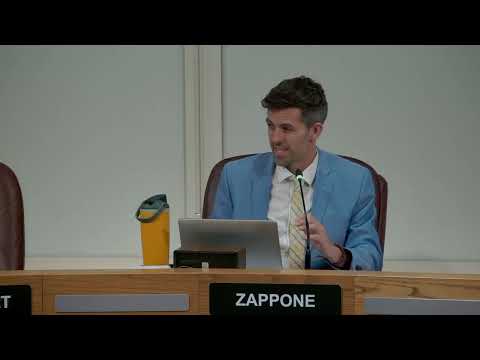
Council Member Dickson said he had not seen the drone purchase paperwork and asked whether procurement for barriers should be treated separately from the drone order. "I haven't laid eyes on the actual paperwork from the drone purchase," he said, and pressed staff on turnaround times for different items.
Council members also questioned a listed drone accessory described in the order as a "dropper." Several members asked whether a dropper could be used to deliver items during an incident. Mr. Scott described the dropper as an attachment to the drone payload intended to carry small items "like a cell phone, cigarettes or small items" and emphasized that Federal Aviation Administration rules and city policy prohibit using drones to deploy weapons.
Staff said some items, notably barriers, have roughly a 60-day order turnaround and that supply constraints affect drone availability because manufacturers are prioritizing other customers. Council members discussed the possibility of using barriers procured under the grant at other city events to reduce overtime costs for officers, and staff said repurposing was possible but would require maintenance and logistical planning.
Mr. Scott said staff will proceed with the contractual process once DHS releases funds and work to place orders early to preserve the city's reimbursement eligibility. No formal action on procurement was taken at the April 20 review; staff indicated the contracts and purchase items will be routed through the council process as required.