Get Full Government Meeting Transcripts, Videos, & Alerts Forever!
Get email alerts on the Childcare Millage topic
No spam. Unsubscribe anytime.
Presenters outline proposed 0.5‑mill county childcare millage to boost wages and expand subsidies
Summary
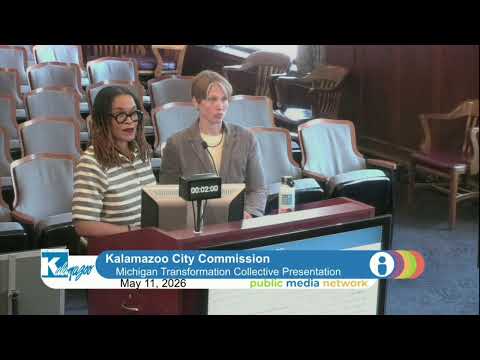
At a May 11 Committee of the Whole meeting in Kalamazoo City, Dr. Lana Ferguson and Beth Bergland of the Michigan Transformation Collective presented a proposed Kalamazoo County 0.5‑mill, eight‑year childcare millage to fund provider wage supplements, subsidies and navigation; presenters estimated about $6.39 million in year one and described a county‑led governance structure with community advisory roles.
Dr. Lana Ferguson, executive director of the Michigan Transformation Collective, and Beth Bergland, policy and strategy director, told the Kalamazoo City Commission Committee of the Whole on May 11 that a proposed Kalamazoo County ballot measure would create a dedicated local funding stream to address childcare affordability and provider wages.
"There's an affordability, a crisis in childcare," Ferguson said, noting that the average cost for infant care in Kalamazoo County is about $280 a week — "it's more than $12,000 a year." She and Bergland said providers spend 80–87% of costs on labor, leaving little room to raise teacher pay without public support.
The proposed ballot language would ask voters on Aug. 4 to approve a 0.5‑mill property tax levy for eight years. Presenters said that for a home with a market value of $200,000 and a taxable value of $100,000 the levy would amount to about $50 a year if fully levied, and they estimated the first‑year revenue at roughly $6.39 million.
Why it matters: presenters and commissioners framed the proposal as a response to a countywide shortage of licensed childcare and low wages that push teachers into public‑benefits eligibility. Ferguson said the county is a "childcare desert" in many neighborhoods, with average slot ratios as low as one licensed spot for every four infants and much worse in some areas.
Presenters cited a December survey with about 400 respondents showing 82% of parents saying childcare is too expensive and described a state pilot that provides a wage boost to teachers (about $300 monthly for full‑time teachers and $200 for part‑time teachers). They also said fewer than 300 children in the region are enrolled in the TriShare employer‑assistance program and that about 1,100 children under 4 in Kalamazoo County currently receive state childcare subsidy. Ferguson warned that flat state reimbursement (no increase since 2023) and rising minimum wages squeeze providers serving low‑income children.
How the funding would be governed: presenters said the county would retain final decision authority — setting priorities, issuing RFPs and approving contracts — while an advisory structure would keep community input central. The health and community services department would convene a millage advisory committee and an RFP review committee drawn from the childcare coalition to recommend programs and awards.
Implementation timeline presented: if voters approve the levy Aug. 4, the county would finalize priorities and governance between August and December; after winter 2027 tax collections initial allocations and RFPs could move forward and contracts be approved, allowing programs to begin in 2027.
Commissioners' questions and local detail: Commissioner Hess asked whether the City is enrolled in TriShare; staff said the City is not currently enrolled though Kalamazoo County is. Commissioners pressed on evaluation partners and cost modeling; presenters said they have worked with the Children's Funding Project and local partners, that Western Michigan University assisted with the survey, and that cost modeling is available to estimate how many children different prioritization choices could serve. Presenters provided local counts during questioning: about 760 employed daycare teachers in the county, 261 licensed childcare programs in total, and roughly 110–120 programs that accept infants.
Local pilots and employer models: presenters highlighted local pilots including housing‑linked support for home‑based childcare and city investments (cited as $190,000) to increase access to the state's TriShare program and to support provider business development. Commissioners and presenters also discussed employer‑run onsite childcare (referenced by presenters with examples like CALSAC/CALec) as transformational where feasible.
No formal action was taken; the presentation was informational and the millage would appear on the Aug. 4 county ballot. The county commission, if the measure passes, would be responsible for adopting final priorities and contracting to implement programs.