Get Full Government Meeting Transcripts, Videos, & Alerts Forever!
Get email alerts on the Land Use Design topic
No spam. Unsubscribe anytime.
Planning commission backs revised residential design standards, sets 10-foot separation for clustered units
Summary
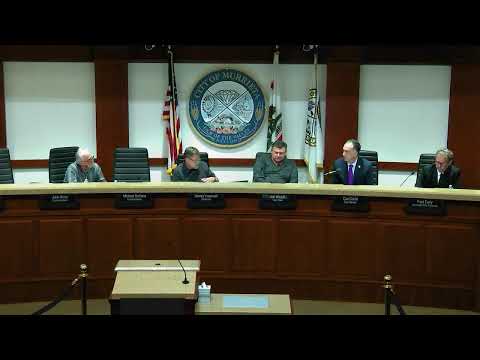
Murrieta City Planning Commission voted to forward revisions to the Residential Objective Design Standards to City Council after adopting staff recommendations with changes: removal of chapter 5 from the ODS, and a 10‑foot minimum separation for structures on the same lot; council hearings are scheduled for June 2 and June 16.
The Murrieta City Planning Commission voted to recommend that City Council adopt changes to the city’s Residential Objective Design Standards, approving staff’s package with three modifications including removing a check‑list chapter, setting a 10‑foot minimum separation between structures on the same lot for most cases, and exempting single‑family homes on one lot in rural/estate residential zones from the ODS.
Staff presentations described a suite of changes intended to make objective design rules easier to apply to today’s housing products. Senior staffer Mr. Watts said the draft adds explicit guidance for small clustered street types — including a decorative‑paving standard, modest raised entries to slow vehicles, landscaping, and a shade‑tree target of one tree for every eight residents. He also summarized new ADU guidance: “any exterior stairs that access an ADU cannot be built within 10 ft of a property line,” a standard the draft includes to protect neighbor privacy.
Why it matters: the updates aim to reconcile state housing law and developer feedback with locally administered objective standards. Dennis, a staff planner, told commissioners that developers had reported difficulty achieving required densities under the old separation rules. Staff also said the project was funded by a Southern California Association of Governments (SCAG) REAP grant that expires July 1, and that the ordinance is scheduled for City Council first reading on June 2 with a second reading on June 16.
Commission debate focused on the distance‑separation rule. Staff initially proposed reducing certain separation requirements to 5 feet for some clustered product types; commissioners and members of the public raised concerns about crowding, privacy and precedent. Commissioners discussed a sliding scale keyed to building height and use, but ultimately Commissioner Voycheek moved to adopt the staff recommendation with the changes described and to forward the ordinance to council. The motion was seconded and carried.
Public commenters during the hearing urged preserving flexibility for rural and estate lots. Cassen Klein asked that larger rural lots retain broader style choices — ranch, French country and other large‑lot styles — and urged the commission to recommend council revisit options for large parcels. In response to HOA concerns, staff said state law and recent court rulings interact with local authority: staff advised that city standards apply first but the interplay with HOA covenants can be legally complex.
What the commission approved: the Planning Commission voted to forward a resolution recommending that City Council introduce an ordinance to (1) adopt revised Residential Objective Design Standards and related code amendments, (2) remove chapter 5 (the staff checklist) from the adopted ODS so that staff can update administrative checklists without amending the ordinance, and (3) set a 10‑foot separation standard for structures on the same lot in the situations addressed, while exempting one‑home‑on‑one‑lot rural/estate residential projects from ODS architectural requirements. The commission also confirmed the project’s funding source and schedule for council consideration.
The next step: the commission’s recommendation will go to the City Council for introduction and first reading on June 2 and a second reading on June 16. If council adopts the ordinance, the new ODS language will become part of the Murrieta Municipal Code and apply to projects within the affected residential zones.