Get Full Government Meeting Transcripts, Videos, & Alerts Forever!
Get email alerts on the Public Safety topic
No spam. Unsubscribe anytime.
Glendora police describe 49 license-plate readers, 30-day retention and restricted sharing
Summary
Police described two camera systems — roughly 49 license-plate-reading cameras and separate live-view pan-tilt-zoom cameras — saying most LPR data is retained about 30 days, encrypted, shared only with California law enforcement, and credited with assisting in roughly 600 cases since 2021.
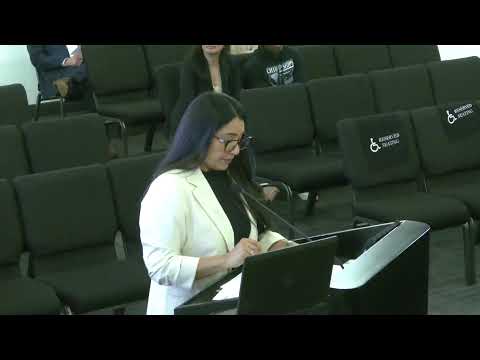
Captain Stabio told the Glendora City Council on May 12 that the police department operates roughly 49 license-plate-reading (LPR) cameras and a smaller set of live-view pan-tilt-zoom cameras placed at strategic ingress and egress points. "The vast majority of them are from a company called Flock," he said, adding the fleet is encrypted to comply with criminal-justice information system requirements.
Stabio said LPR data is used primarily to capture license-plate information and vehicle characteristics; the department limits data sharing to California law-enforcement agencies and does not share with federal immigration or Homeland Security units. He told council the LPR system, in place since 2021, has contributed to about 600 cases where camera evidence aided investigations or prosecutions.
On data retention and analytic capability, council members asked if cameras perform facial recognition; Stabio replied, "No." Asked about retention length, Stabio said the city keeps LPR data in the 30- to 60-day range and said he believed the department maintained a 30-day retention period as a standard. He also noted some cameras are not recordable (the LPR/Flock devices) while pan-tilt-zoom live-view cameras can record; the live-view feeds are used for real-time situational awareness during incidents.
The department said many cameras were funded with federal grants and that the technology has become a significant investigative tool. Council members asked how many cameras were paid for by neighborhoods; the captain said about four residential areas petitioned and paid for a small number of cameras (roughly 10–13 devices across those neighborhoods), not including business-owned cameras.
Council members asked follow-up privacy and policy questions; the meeting later adopted broader meeting-access and social-media policies required by recent state law changes, but no new municipal restrictions or additional ordinances governing camera use were proposed at the meeting.