Get Full Government Meeting Transcripts, Videos, & Alerts Forever!
Get email alerts on the Election Budget topic
No spam. Unsubscribe anytime.
Council reviews Elections Department FY2027 budget as city and state split costs for 2026 cycle
Summary
At a May 14 Boston City Council Ways and Means hearing, acting Elections Department head Paul Chung described post‑2024 operational improvements and told councilors the state will cover printing and machine programming costs for the 2026 state election, reducing several city budget lines for FY2027.
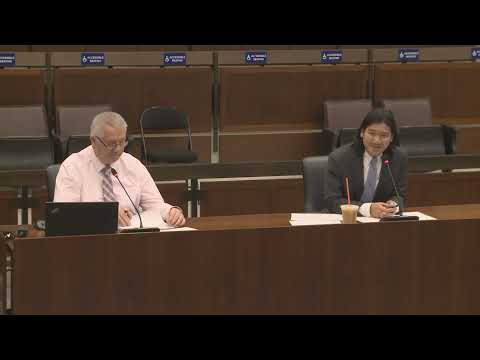
Ben Weber, chair of the City Council’s Ways and Means Committee, opened a May 14 hearing to review the Elections Department’s FY2027 operating budget and invited public testimony and questions from councilors. The session focused on operational improvements since the 2024 elections, staffing needs and how state support affects city budgeting.
Acting department head Paul Chung told the committee the department has worked to modernize operations and strengthen training since the 2024 cycle, with electronic poll books deployed broadly and mandatory hands‑on training for poll workers. He said the department’s work includes mailing the annual census to every Boston household, conducting voter registration drives and staffing a call center that partners with 311 to support poll workers.
Chung and Head Assistant Registrar Sabino Piemonte highlighted performance metrics from the November 2025 municipal election: poll pads were used at 274 locations with no reported connectivity failures for those devices in the city’s testing program, and staff reported an average call‑answer time from poll workers of under seven seconds. Piemonte told the council that in‑person early voting typically accounts for about 15–20% of ballots, and combined early/mail voting is roughly 30–35% of total ballots cast.
Councilors pressed officials on several budget items. Chung said cuts reflected in the FY2027 draft are largely driven by the state covering the costs of printing ballots, vote‑by‑mail postage and machine programming during the state election cycle. That shift reduced contracted services and some emergency employee line items in the city’s request, officials said, but they told councilors they expect to fill vacant program manager posts ahead of the primary and midterm cycles.
Councilors also pressed department leaders on contingency planning, the status of state orders and legal risk. Chung said several components of the Secretary of the Commonwealth’s orders have been satisfied, but the Secretary may reevaluate those orders after 2026. He added the department is tracking national court cases related to mail‑in ballots closely and would follow guidance from the Secretary’s office and the city law department.
The hearing concluded with councilors thanking department staff and poll workers and no formal vote taken; the committee did not take immediate budget action during the session.